
Whether at Sotheby’s Contemporary Day Auction on May 15 or at the Phillips sale held yesterday, a large portion of the works sold close to their low estimates — with Beatriz Milhazes as the exception to the rule.
The New York sales remain one of the main barometers of the international market and, for Brazilian art, they reveal an increasingly selective landscape. In recent years, the presence of Brazilian artists has moved from episodic to recurring, spanning both historical works and contemporary artists driven by more speculative demand. At Sotheby’s, Hélio Oiticica appeared with two Metaesquemas, the fundamental series from his 1950s production. Metaesquema 193, from 1957, sold for US$102,400, remaining close to the lower end of its estimate range.
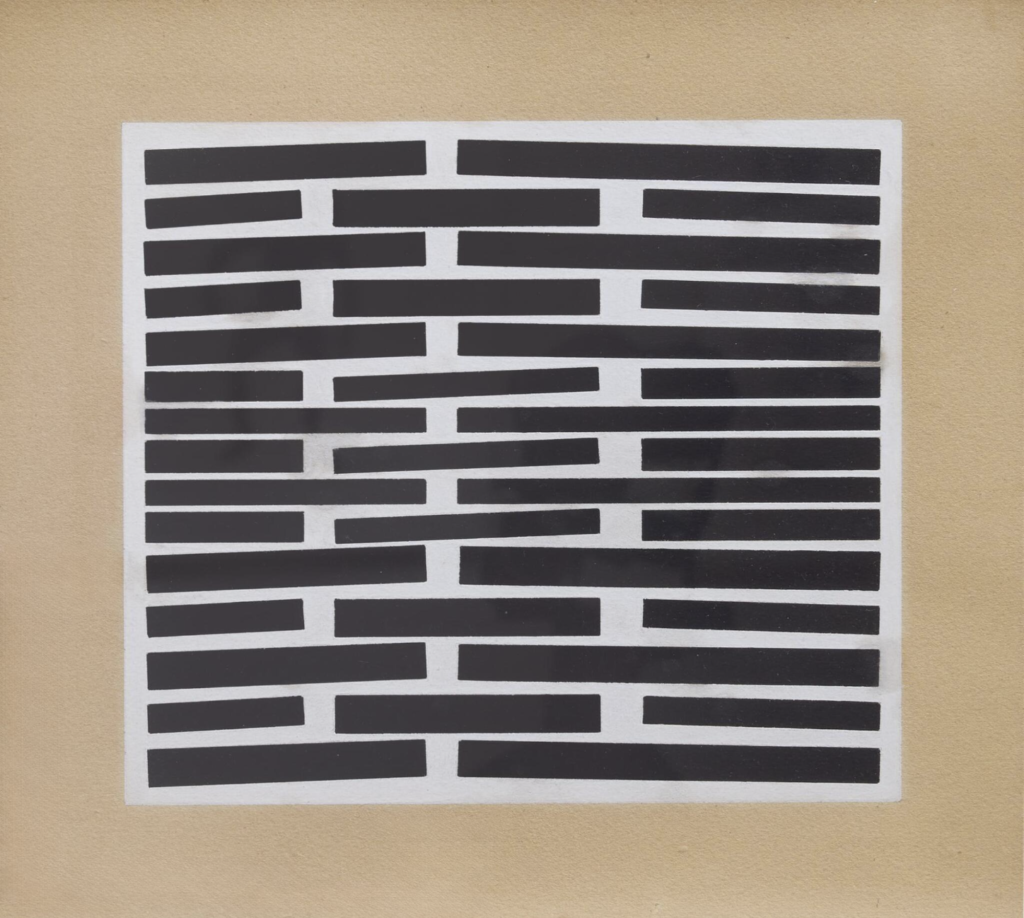
Hélio Oiticica
Metaesquema 193, 1957
Gouache on cardboard
29.8 x 33 cm
$100.000 – $150.000
Sold: $80.000
The other Metaesquema, from the same year, estimated between $80.000 and $120.000, larger in format and with provenance from renowned American collections, reached $166.400, exceeding the top estimate.
Although positive, the results do not indicate exceptional competition, something quite natural, given that these were Metaesquemas on paper, a relatively abundant body of work, unlike Oiticica’s paintings, spatial reliefs and three-dimensional works connected to the expansion of color in space, recently reactivated by the artist’s presentation at Dia Beacon.

Hélio Oiticica
Untitled (Metaesquema), 1957
Gouache on cardboard
42 x 46 cm
$80.000 – $120.000
Sold: $166.400
This reading is confirmed in the case of Sérgio Camargo. Untitled (#456), from 1978, in Carrara marble, estimated between $80.000 and $120.000, simply failed to find a buyer. The result highlights the limited liquidity for medium-scale Brazilian Constructive works.
In the case of Sérgio Camargo, works of this level tend to reveal their strength more fully when installed in institutional exhibitions or in private collections capable of enhancing their physical presence. The experience of light, cut and volume, central to his production, requires a direct relationship with space in order to be fully perceived, a condition that auctions do not always provide.
This difference in reception between works of intermediate quality and works with greater institutional density becomes clearer when looking at the contemporary segment, which in recent years has taken on a prominence once largely reserved for historical and modern names.
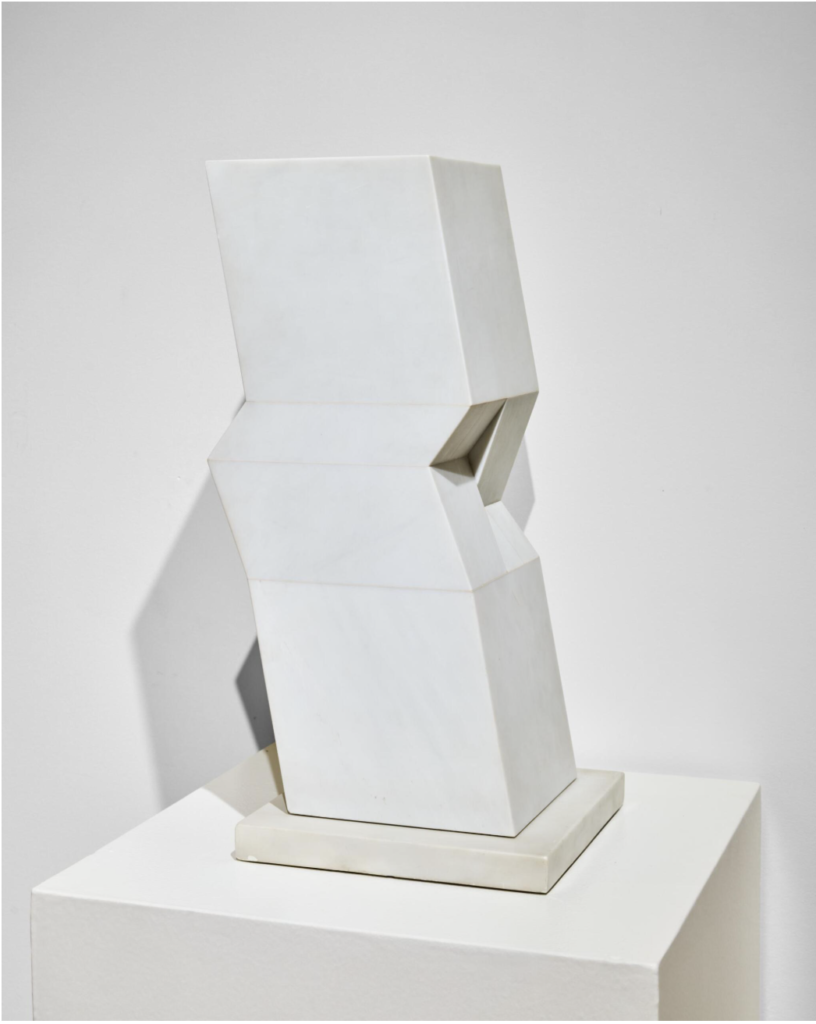
Sergio Camargo
Untitled (#456), 1978
Carrara marble
58 x 27 x 31 cm
$80.000 – $120.000
Unsold
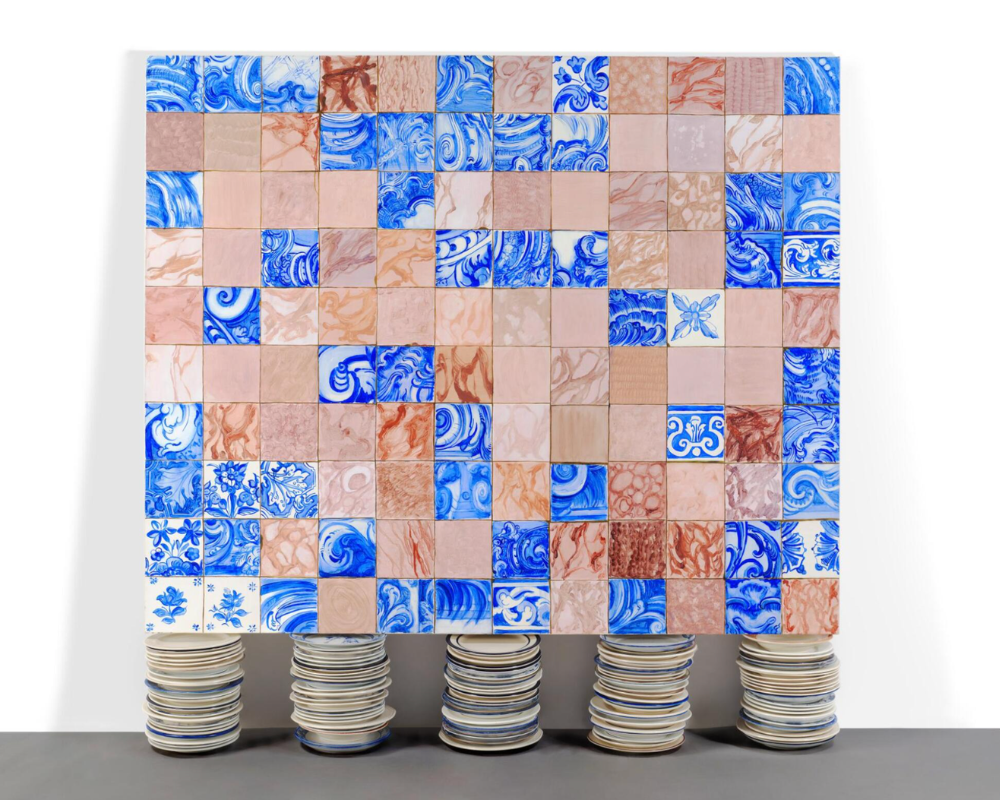
In this context, Adriana Varejão, with international presence and a strong critical narrative, concentrated a significant share of attention with two works presented this season. Her Tela sobre pratos, created between 1999 and 2000, sold for $486.400 with buyer’s premium, although it was hammered below its low estimate of $400.000.
The work, connected to an institutional collection in Puerto Rico, had been circulating for years on the private market and carried a particular complexity: its structure made of plates poses challenges of conservation, transport and installation, factors that can directly affect its liquidity. The sale took place at a crucial institutional moment for the artist, who this year represents Brazil at the Venice Biennale alongside Rosana Paulino in Comigo ninguém pode, curated by Diane Lima.
In this context, the market would naturally tend to watch any relevant work by the artist coming to auction with heightened attention. The possibility that this work may have been supported by agents close to her market at strategic moments is a known practice within the art system. This more historical work differs, in terms of liquidity, from the artist’s more recent series, such as her famous azulejos, more decorative works sought after by architects and collectors.
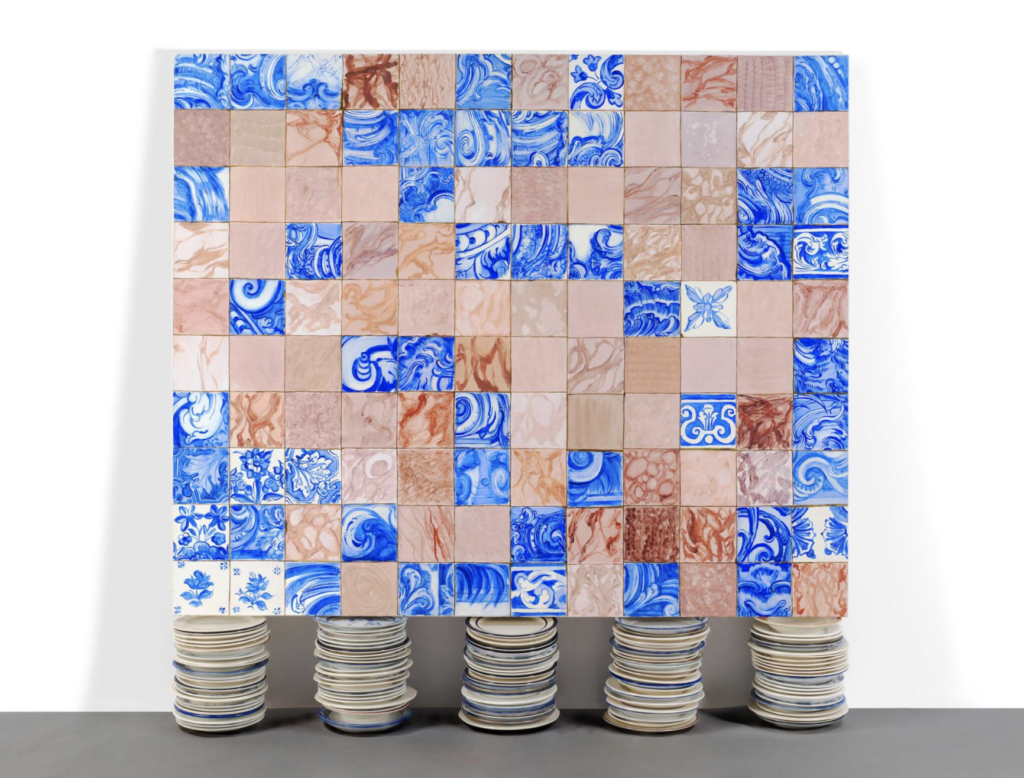
Adriana Varejão
Tela sobre pratos, 1999-2000
Oil on canvas with 121 plates
Signed, titled and dated 1999/2000 (on the reverse)
180 x 179.1 cm
$400.000 – $600.000
Sold: $486.400
In this context, the 2014 tondo, in a celadon tone evoking Asian ceramics, estimated between $250.000 and $350.000, achieved a solid result yesterday at Phillips, reaching $361.200 and reaffirming the market’s appetite for highly liquid works, despite a production that has become increasingly broad.
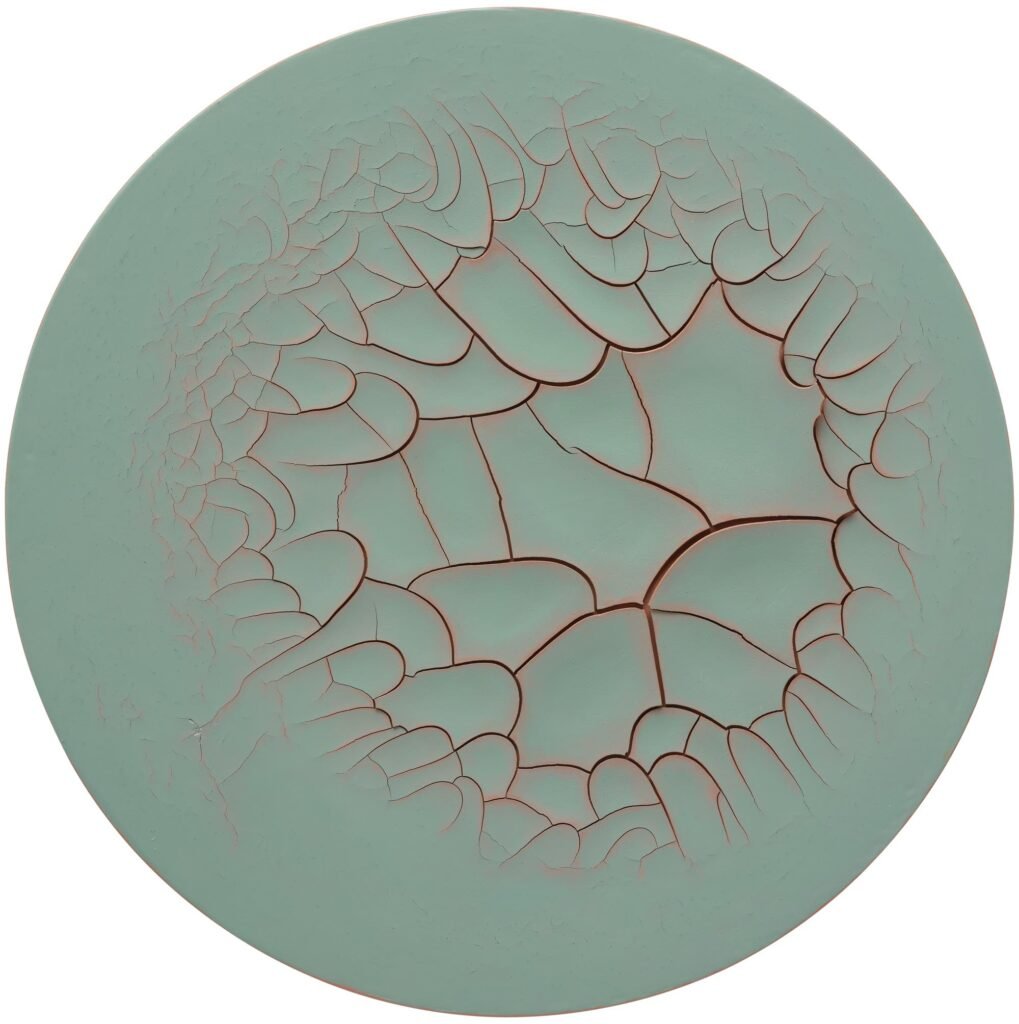
Adriana Varejão
Monocromo redondo Guan, 2014
Oil and plaster on canvas
Signed, titled and dated “Monocromo redondo Guan A.
varejão. 2014″ on the reverse
120 cm
Sold: $361.200
Another name closely watched was Antonio Obá. Herói do fogo interior II – A façanha, from 2020, estimated between $80.000 and $120.000, reached $204.800 at Sotheby’s.
The result confirms continued interest in the artist, although at a significantly lower level than his November record, when Alvorada, Música Incidental Black Bird, from 2020, a monumental work already presented in several international exhibitions and reproduced in publications dedicated to the artist, surpassed $1 million at Sotheby’s New York.
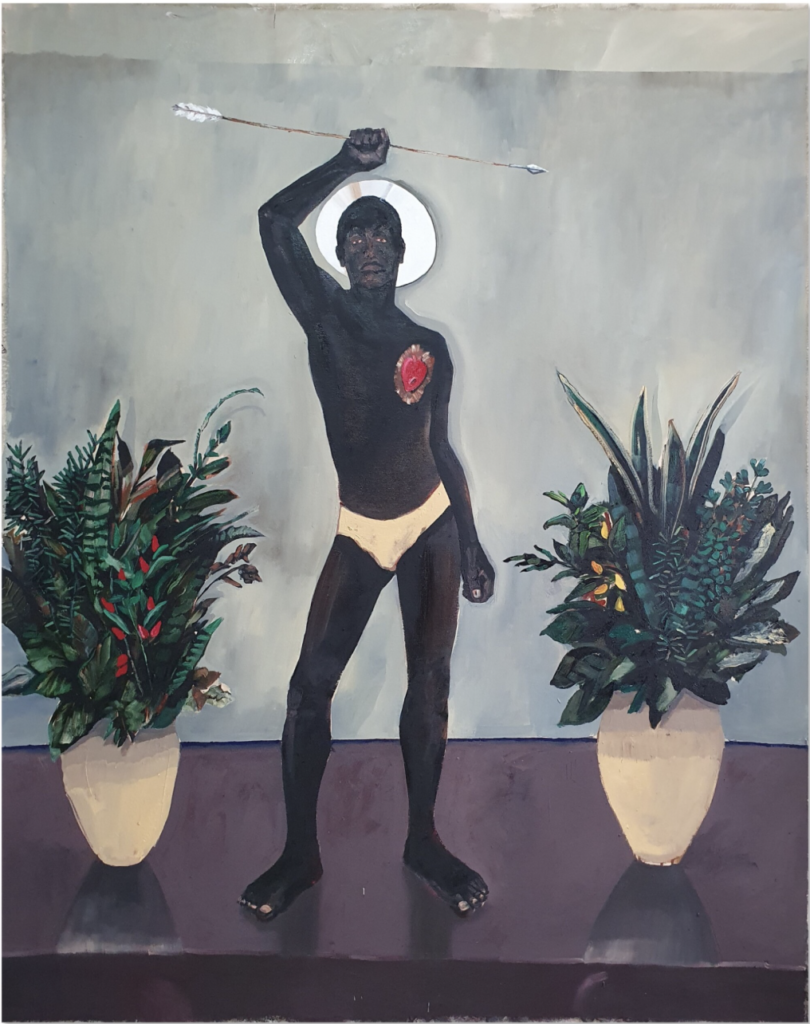
Antonio Obá
Herói do fogo interior II – A façanha, 2020
Oil on canvas
174 x 138.4 cm
$80.000 – $120.000
Sold: $204.800
Paraty, 2001, by Beatriz Milhazes at Phillips, attracted strong attention from Brazilian collectors by bringing together rare attributes on the market: ornamental refinement, Baroque density, an easily placeable format and an affective dimension linked to the artist’s own biography.
After an intense bidding battle between the room and the phones, Paraty reached $516.000, a result that carries even greater weight given Beatriz’s current institutional momentum. The artist has recently benefited from a sequence of strategic presentations, from the Guggenheim in New York to White Cube in London and Casa Roberto Marinho in Rio de Janeiro, consolidating a simultaneous circulation between leading museums and top-tier galleries.
In this context, the work sold by Phillips establishes itself as a new reference point for the artist’s market, widely surpassing, in value relative to its scale, the recent sale of Goa (2017), the monumental painting sold for US$769,687 at Sotheby’s London in March. Together, the two results confirm the solidity of demand for Beatriz’s works on the international market.
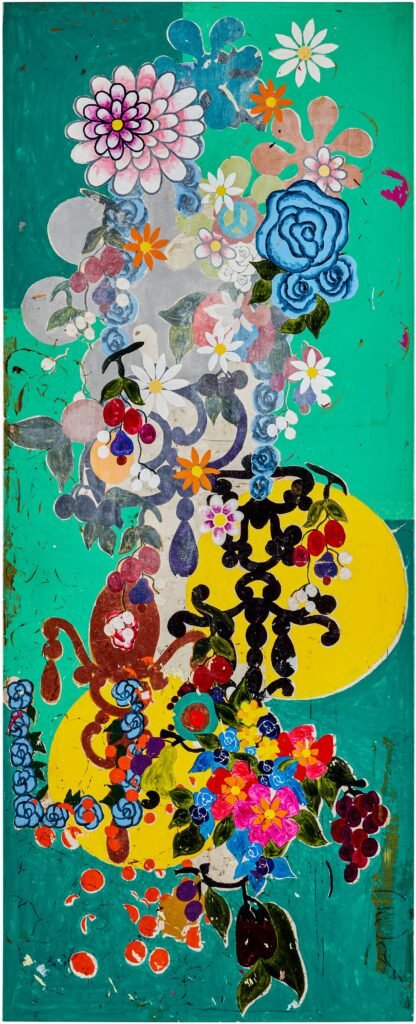
Beatriz Milhazes
Paraty, 2001–2002
Acrylic on canvas
198.4 x 80 cm
$300.000 – $500.000
Sold: $516.000
Marina Perez Simão, by contrast, failed to find a buyer for a medium-format work dated 2019, marked by a more restrained composition, far from the chromatic vitality and spatial tension that characterize her most sought-after works on the market.
Since her first appearance at auction, on May 19, 2023, at Sotheby’s New York, Marina Perez Simão has had 29 paintings offered at international auctions, of which 26 were sold, representing a sell-through rate of approximately 90%.
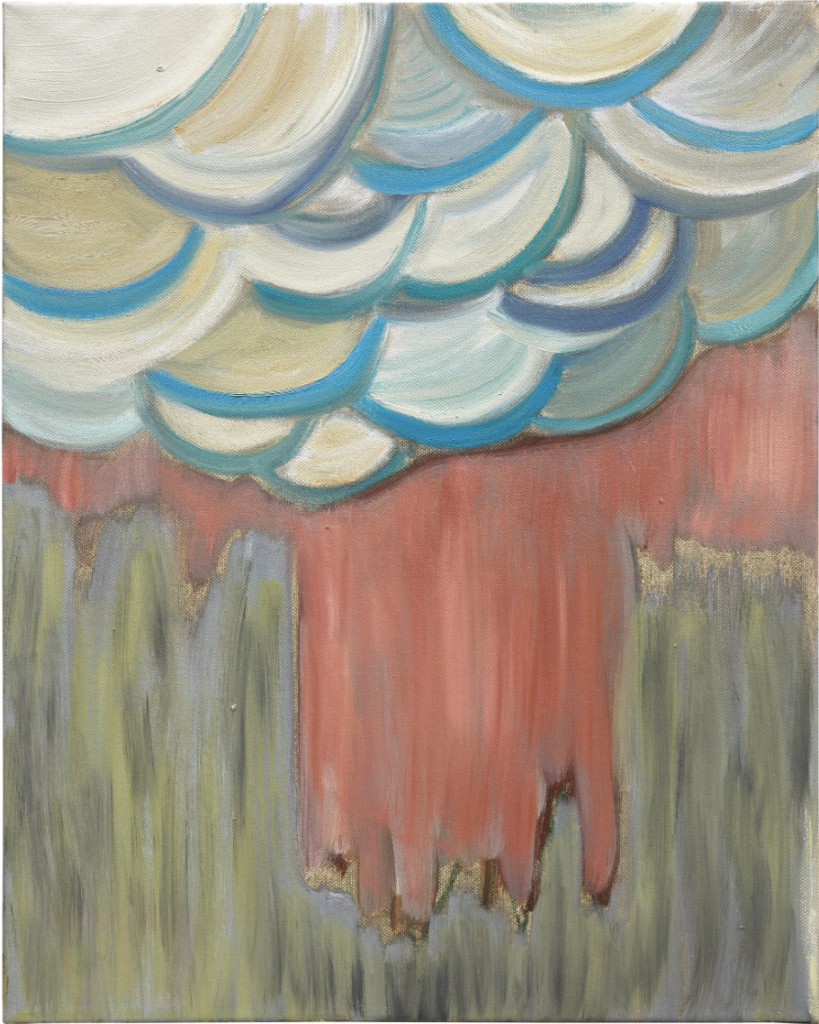
Marina Perez Simão
Untitled, 2019
Oil on canvas
50 x 40 cm
$30.000 – $40.000
Unsold
In just three years, this represents an average of around nine works sold per year, a particularly rare pace for a Brazilian artist born in 1980.
This volume, however, raises a question reinforced by yesterday’s result: to what extent will the market be able to absorb such accelerated supply in the coming years?