
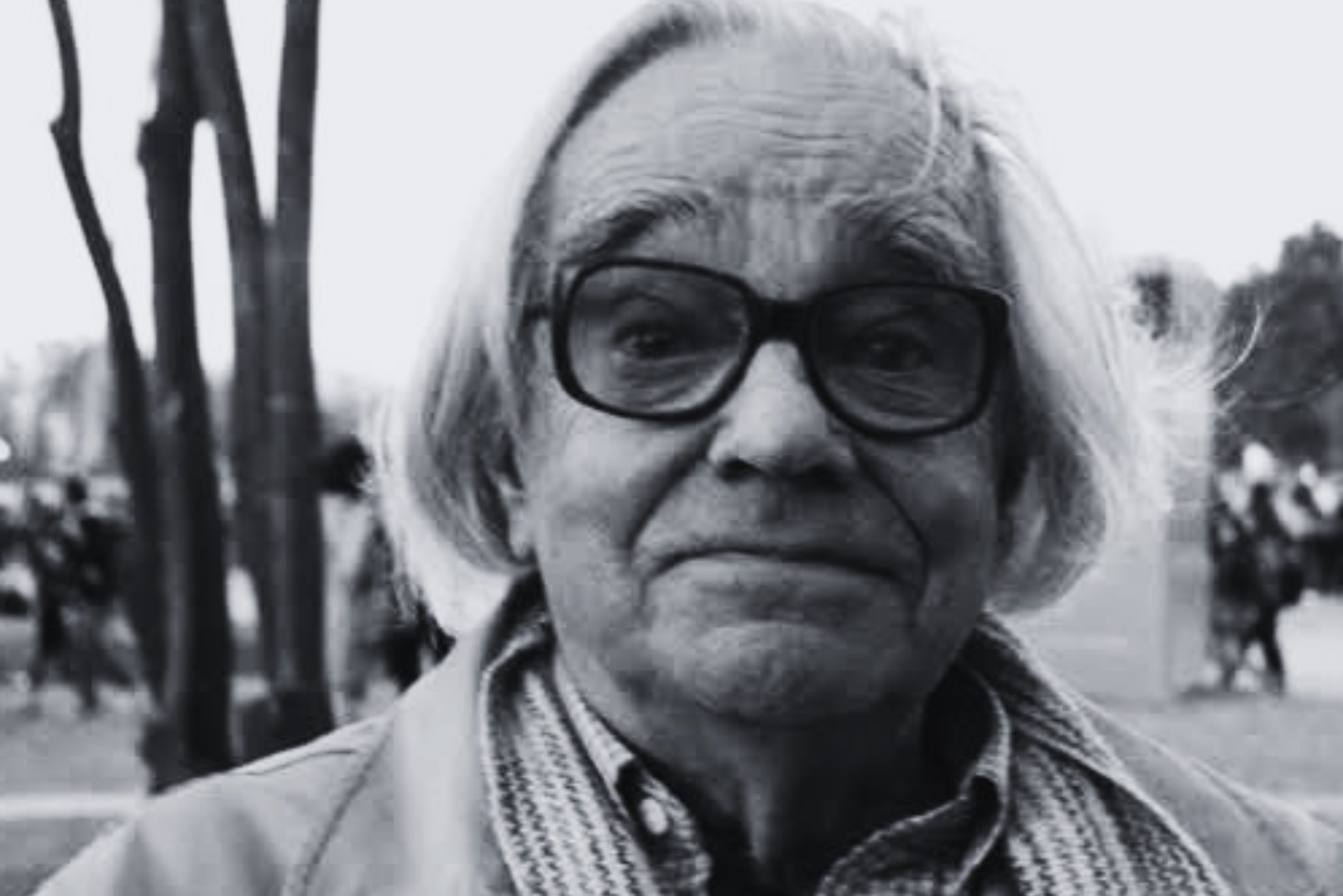
León Ferrari was born in Buenos Aires, Argentina, in 1920, and died there in 2013. An Argentine visual artist and one of the central figures of Latin American conceptual art, he developed a radical practice spanning sculpture, drawing, collage, installation, writing, printmaking, artists’ books, sound, and video, addressing political critique, language, religion, violence, authoritarianism, and systems of oppression. Through wire sculptures, calligraphic drawings, collages, heliographs, visual texts, and installations with a strong ethical dimension, Ferrari confronted the complicity between institutional religion, political power, state repression, and social violence, transforming words and images into instruments of denunciation, irony, and resistance.
He lived in exile in São Paulo between 1976 and 1991, a period during which he expanded his formal experimentation and his engagement with the Brazilian art scene. He participated in major international exhibitions, including the 52nd Venice Biennale in 2007, where he received the Golden Lion, as well as shows at the Museum of Modern Art — MoMA in New York; the Museo Nacional Centro de Arte Reina Sofía in Madrid; the Centre Pompidou in Paris; the Pérez Art Museum Miami — PAMM; and institutions across Latin America, Europe, and the United States.
His works are held in significant institutional collections, including MoMA, the Museo Reina Sofía, the Centre Pompidou, MALBA — Museo de Arte Latinoamericano de Buenos Aires, MAM Rio, the Pinacoteca de São Paulo, Tate, the Art Institute of Chicago, the Museum of Fine Arts, Houston, PAMM, and the Daros Latinamerica Collection.
To provide the best experiences, we use technologies like cookies to store and/or access device information. Consent to these technologies will allow us to process data such as browsing behavior or unique IDs on this site. Not consenting or withdrawing consent may negatively affect certain features and functions.
Market reports for visionary collectors and insiders.