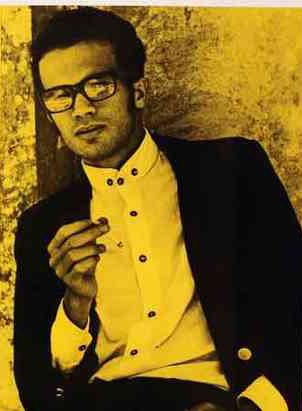
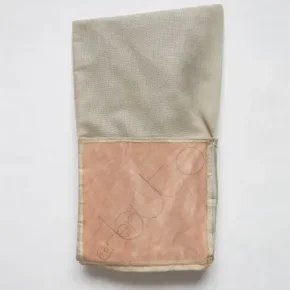
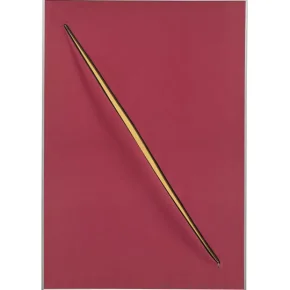
Raymundo Felicíssimo Colares (1944–1986) was a Brazilian artist renowned for his innovative fusion of geometric abstraction, pop art, and urban motifs. Born in Grão Mogol, Minas Gerais, he initially pursued engineering studies in Salvador but soon shifted his focus to art, drawing inspiration from Piet Mondrian and Paul Klee. In 1965, Colares moved to Rio de Janeiro, where he studied at the Escola de Belas Artes and later joined Ivan Serpa's independent studio at the Museum of Modern Art (MAM/RJ). His participation in the 1967 "Nova Objetividade Brasileira" exhibition marked his emergence in the Brazilian avant-garde scene. Colares's work is characterized by vibrant enamel paintings on aluminum and interactive "gibis"—foldable paper books that engage viewers in a tactile experience. His art often depicted the dynamic patterns of urban life, such as bus designs, reflecting a keen interest in movement and modernity. In 1970, he received a travel grant from the National Salon of Modern Art, allowing him to expand his artistic horizons in New York, Trento, and Milan. Upon returning to Brazil, he continued to create and teach until his untimely death in 1986. Colares's legacy endures as a testament to his unique contribution to contemporary Brazilian art.