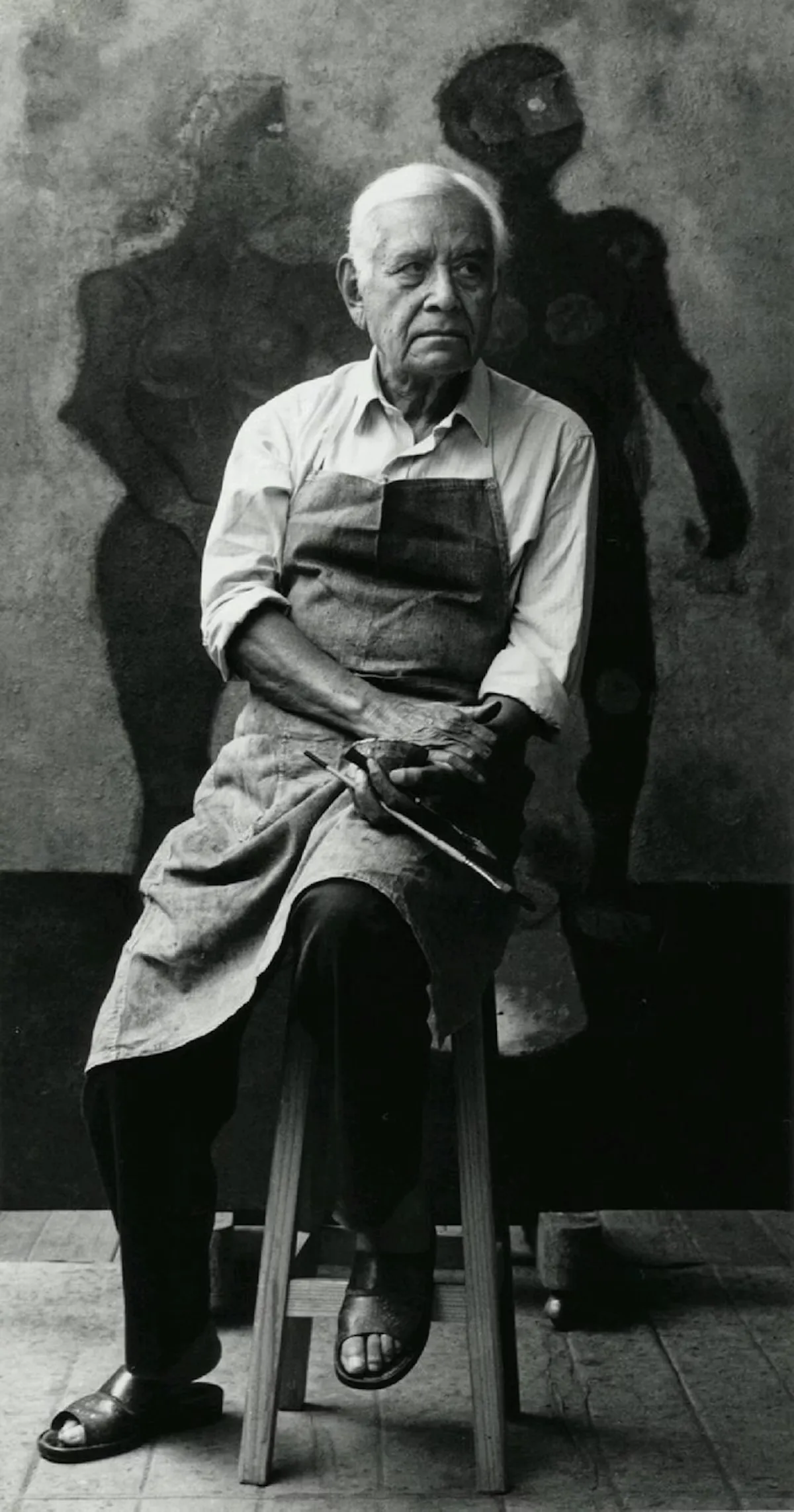
Rufino Tamayo (1899–1991) was a distinguished Mexican artist known for his unique fusion of European modernism with Mexican folk art and pre-Columbian motifs. Born in Oaxaca, Mexico, Tamayo's Zapotec heritage deeply influenced his artistic perspective. He studied at the Escuela Nacional de Artes Plásticas in Mexico City but soon pursued independent study, leading to a distinctive style that diverged from the politically charged Mexican muralists of his time. Tamayo's work is characterized by bold colors, simplified forms, and a focus on universal themes such as humanity, nature, and the cosmos. His innovative approach extended to printmaking, where he co-developed the "Mixografia" technique, allowing for textured, three-dimensional prints. Throughout his career, Tamayo's art gained international acclaim, with exhibitions in major museums worldwide. He also contributed to cultural institutions in Mexico, founding the Museo Rufino Tamayo in Oaxaca and the Museo Tamayo Arte Contemporáneo in Mexico City. Tamayo's legacy endures as a testament to his ability to bridge cultural traditions and modern artistic expression.