
The richness of Indonesian art also stems from the diversity of the artists’ origins, given that Nusantara (the archipelago), comprising 17,000 islands, spans nearly 2 million km², stretching from the Indian Ocean to the Pacific Ocean—to give an idea, from Los Angeles to New York.
This diversity is also rooted in strong regional artistic traditions. In Jakarta, the contemporary hub, the art scene is characterized by a fusion of conceptual practices, social criticism, and global influences, a legacy in particular of the New Indonesian Art Movement (Gerakan Seni Rupa Baru) of the 1970s, which challenged traditional academic forms.
Bandung, on the other hand, is historically associated with a more formalist and modernist approach, stemming from the Bandung Institute of Technology (ITB), where fine arts education has long prioritized abstraction, formal experimentation, and a rigor inherited from Western models.
Yogyakarta (Yogya) stands out for its particularly vibrant and engaged scene, fueled by the Indonesian Institute of the Arts (ISI) and a strong community culture. Interdisciplinary exchanges among universities in literature, philosophy, theology, and the social sciences foster relationships between artists and the local intellectual community. Art there is often narrative, political, and rooted in social realities, blending traditional craftsmanship, popular imagery, and experimental contemporary practices.
Finally, Bali offers a unique perspective where art remains deeply intertwined with religious rituals and daily life. Balinese aesthetics, influenced by centuries of Hindu traditions and by exchanges with foreign artists in the 20th century, are characterized by a rich iconography that has inspired schools such as the Batuan school, which blends modernity and spirituality.
Art Central
Located not far from Art Basel and close to the sea, this year’s Art Central 2026 fair is the center of attention thanks to the efforts of the Indonesian government, which, through MTN (Manajemen Talenta Nasional), is supporting the participation of eight young Indonesian galleries based in Jakarta, Bandung, Yogyakarta, and Bali. Under the title Rising Currents, the artists presented reflect a multicultural, multi-ethnic, and multi-religious society.
Thus, Rising Currents highlights not only a new generation of galleries but also the complex heritage and regional dynamics that shape contemporary Indonesian art.
Sewu Satu
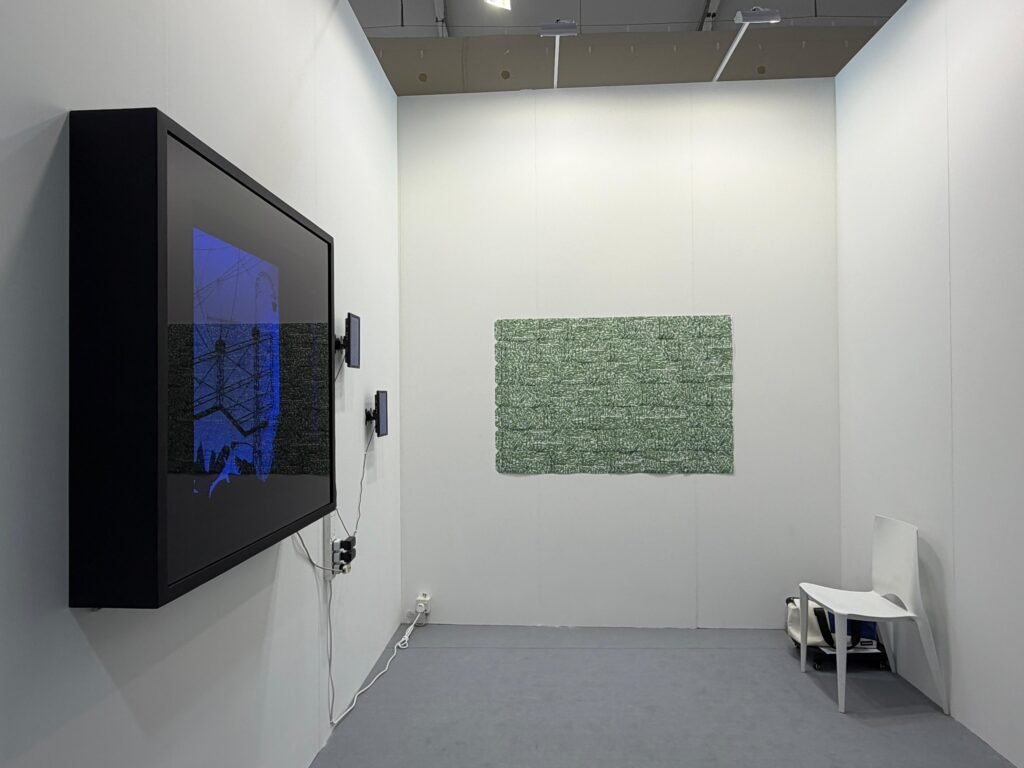
SEWU SATU presents a focused selection of contemporary Indonesian practices, featuring works by Adi Sundoro (Asun) and Muhammad Akbar. The booth proposes a nuanced cultural exchange, positioning artistic production as a bridge between local narratives and global conversations.
Adi Sundoro (b. 1992, Jakarta) develops an expanded approach to printmaking, using it as a conceptual tool to examine contemporary systems of information and authorship. His work explores the circulation and ownership of data in today’s accelerated digital landscape, transforming everyday references, such as food packaging and fragmented documents, into participatory and material forms. The result is a composition made up of an entanglement of printed paper bags; through the material and its transparency, it reveals a conceptual work that becomes a tangible and poetic object. Through this process, Sundoro reflects on the blurred boundaries between visibility, privacy, and collective experience.
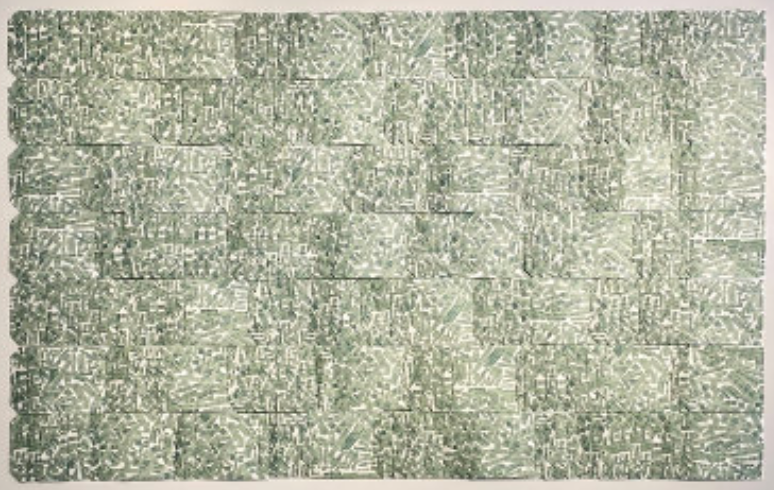
Adi Sundoro
Belantara Data #3 (Data Wilderness #3), 2025
Two offset print on food-grade paper (folded & glued)
100 cm x 155 cm
Edition of 1+ 1 AP
Asking Price: $3.500
Ruci Art Space
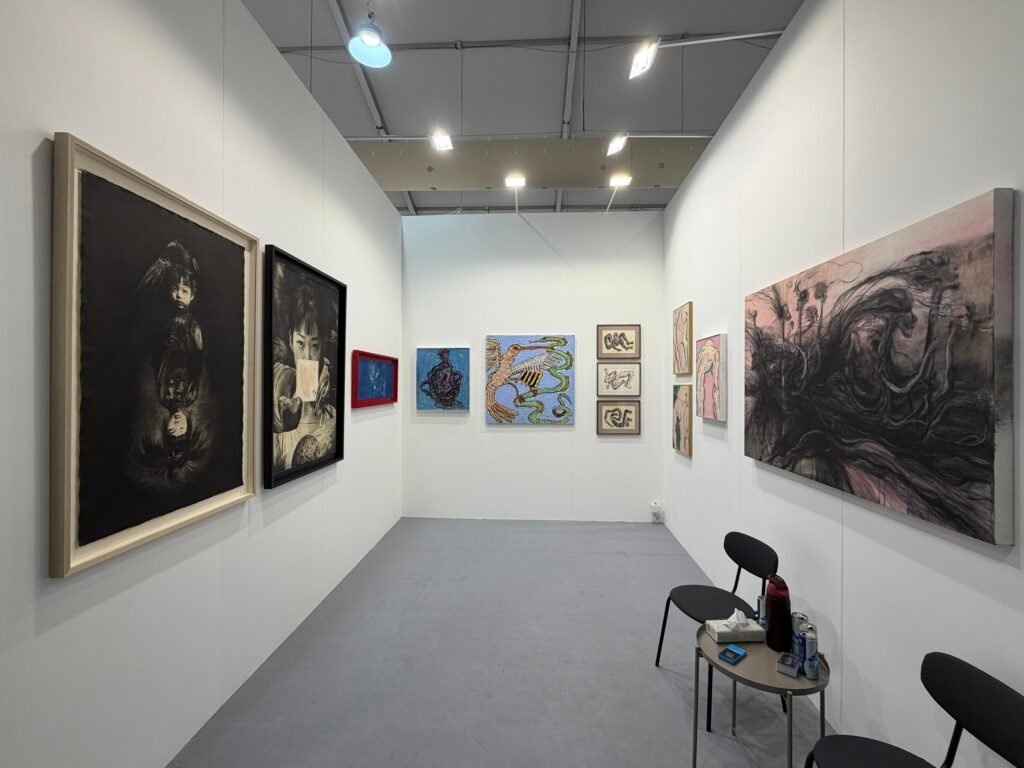
The gallery presents a dual focus bringing together works by Aharimu and Cecil Mariani, highlighting two distinct yet complementary directions within Indonesia’s contemporary art scene. The booth articulates a dialogue between painterly intensity and research-driven practices, reflecting the diversity and vitality of emerging voices from the region.
Aharimu’s sweet, highly saturated oil paintings unfold in a visually immersive language, where color and surface play a central role in shaping emotional and narrative depth. In contrast, using different layers of black print, Cecil Mariani develops an interdisciplinary practice grounded in research, navigating between conceptual inquiry and material experimentation. Using charcoal mix media painting and printing technics, Mariani is developing a critical point vue by using photographic or graphic material to express the layered perspective on contemporary Indonesia.
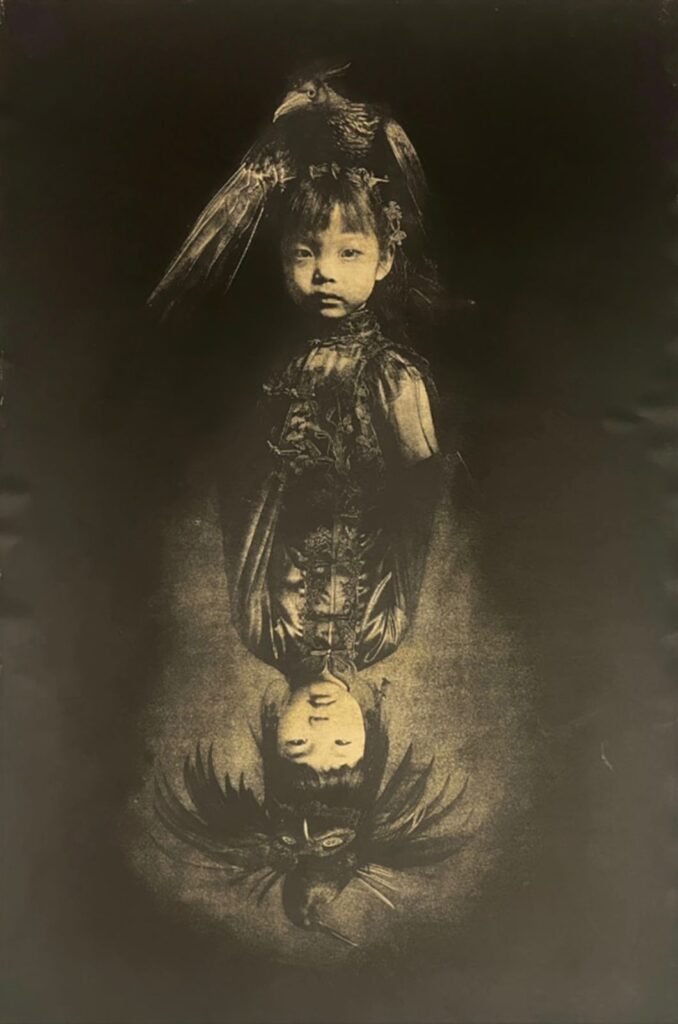
Cecil Mariani
Guardian of Hollowed Self, 2024
Gum Oil
90 x 130 cm
Sold: 3000 USD each
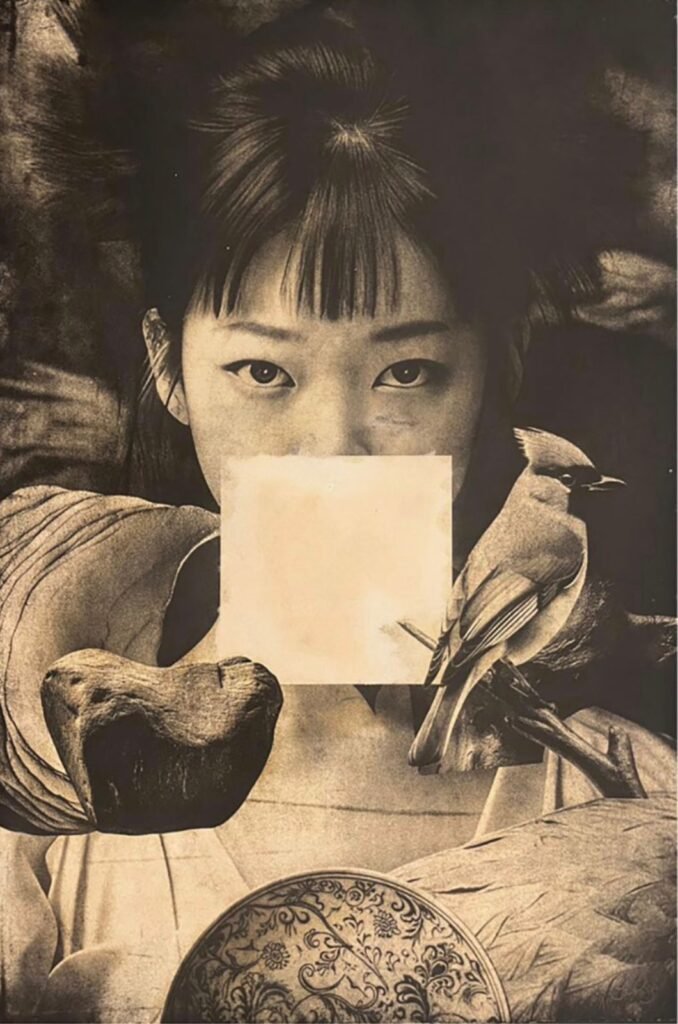
Cecil Mariani
Shamman Sibling #2, 2024
Gum Oil
90 x 130 cm
Sold: 3000 USD each
Sal Project
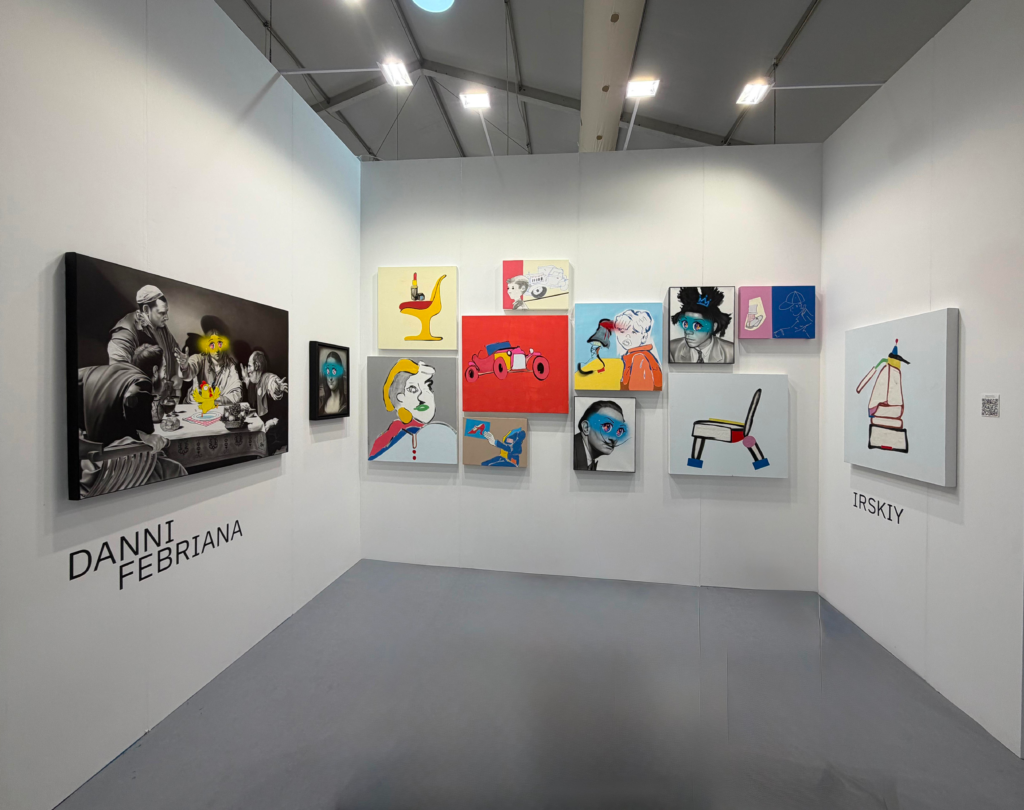
SAL Project reports several sales of paintings of Danni Febriana for $700.00 and $1.300. Founded in 2020, SAL Project has positioned itself as a key platform for emerging artists, fostering practices that engage with both local contexts and global visual languages
This early engagement underscores the relevance of the gallery’s program within the broader context of Art Central Hong Kong, where emerging Indonesian artists are gaining increasing visibility among international collectors.
For this edition, the gallery presents works by Danni Febriana and Irskiy, whose practices navigate the intersection of historical memory, material experimentation, and contemporary culture. Through distinct yet complementary approaches, both artists reflect on how past narratives and evolving visual codes inform present-day artistic expression, offering a nuanced perspective on the shifting landscape of Indonesian contemporary art.
Dani Febriana reinterprets classical Western painting using charcoal and chiaroscuro, from which emerge elements of our shared everyday culture, and completes portraits with expressions straight out of comic books. In parallel, Irskiy develops a practice rooted in material exploration and visual culture, often engaging with urban references and layered compositions that reflect the rhythms and textures of contemporary life. His works suggest a dynamic interplay between structure and spontaneity, contributing to a broader reflection on how images are constructed and perceived in today’s visual environment.
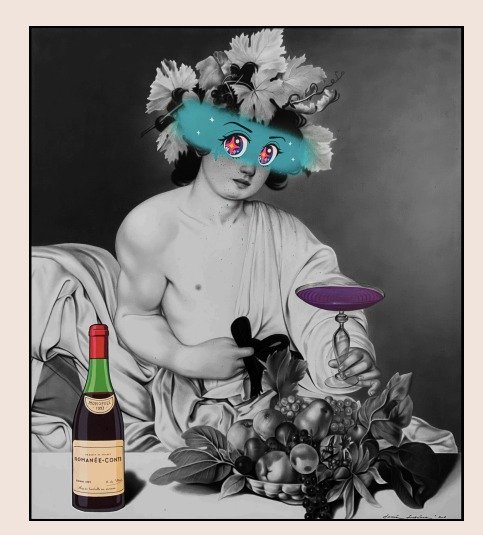
Danni Febriana
The Master after Caravaggio, 2026
Charcoal, spray paint, acrylic on canvas
80 x 70 cm
Sold: $1.300
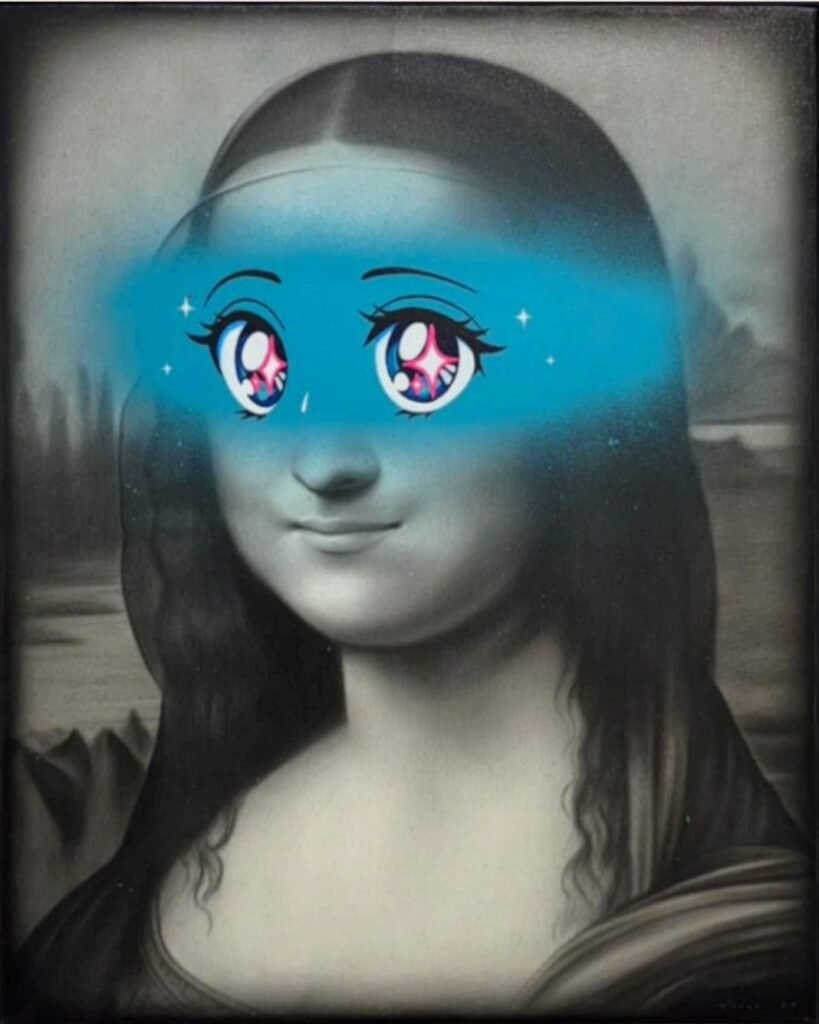
Danni Febriana
Monalisa, 2024
Charcoal, spray paint, acrylic on canvas
60 x 50 cm
Sold: $700.00
Ruang Dini
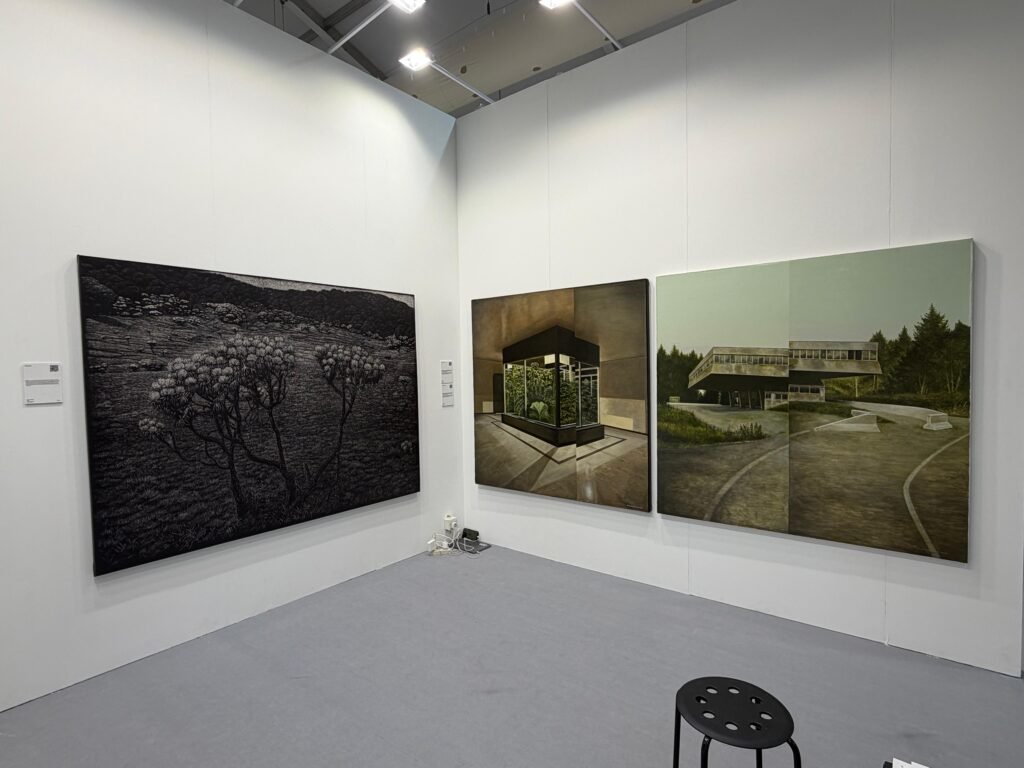
Ruang Dini, a community art space developed by Bandung-based artist Andy Dewantoro, presents a focused selection reflecting the strength and diversity of Indonesia’s contemporary scene, bringing together works by Andy Dewantoro and Maryanto. The booth highlights two distinct yet complementary approaches, both grounded in a critical engagement with history, space, and collective memory.
Dewantoro’s practice unfolds through a multidisciplinary approach spanning painting, installation, and drawing, often combining personal narratives with broader cultural and historical references. His works are characterized by a layered visual language, where symbolic imagery, fragments of memory, and elements of everyday life intersect, creating complex compositions that invite both introspection and interpretation. Drawing on his experience living in Romania and traveling throughout Eastern Europe, he has photographed Brutalist architecture, which he reinterprets in his paintings through muted, neutral tones, constructing poetic yet critical reflections on identity and contemporary society.
In parallel, Maryanto develops a research-driven practice that explores the relationship between landscape, labor, and systems of extraction. Working primarily with charcoal on paper, his large-scale drawings depict mining sites, industrial terrains, and altered environments, reflecting on the ecological and social consequences of human intervention. Through a meticulous and almost meditative technique, Maryanto reveals the tension between nature and industry, positioning his work within broader global discussions on resource exploitation, environmental transformation, and the unseen forces shaping contemporary life.
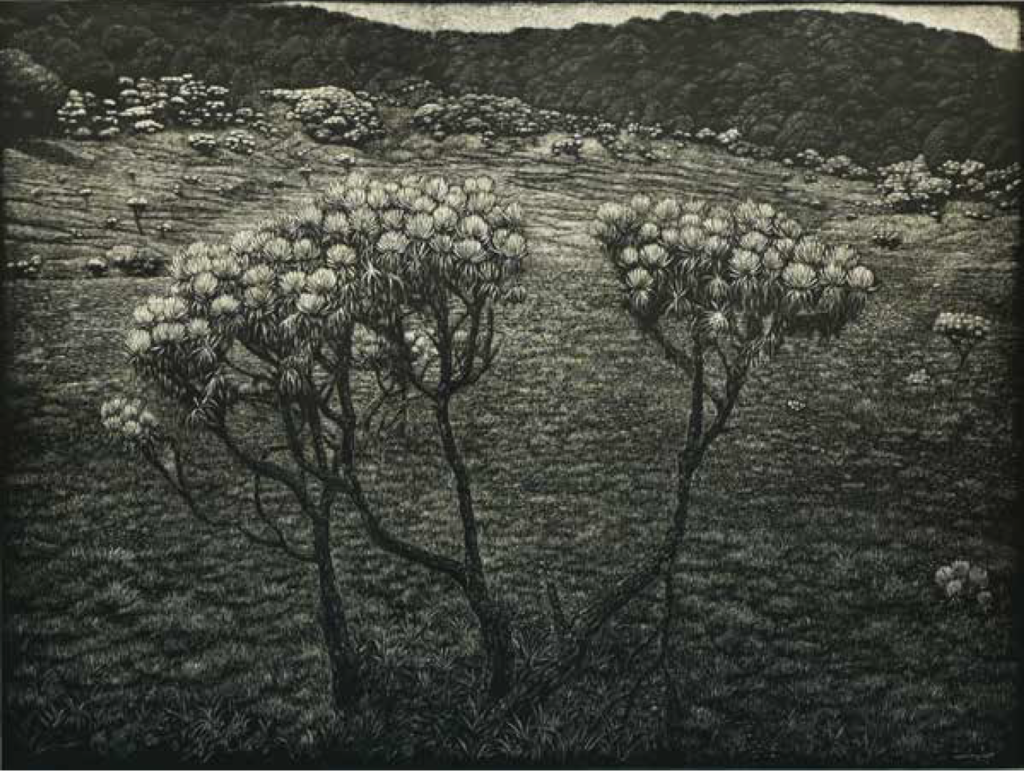
Maryanto
On the Wild Side, 2026
Acrylic on Canvas
150 x 200 cm
Asking Price: $33.000
V & V
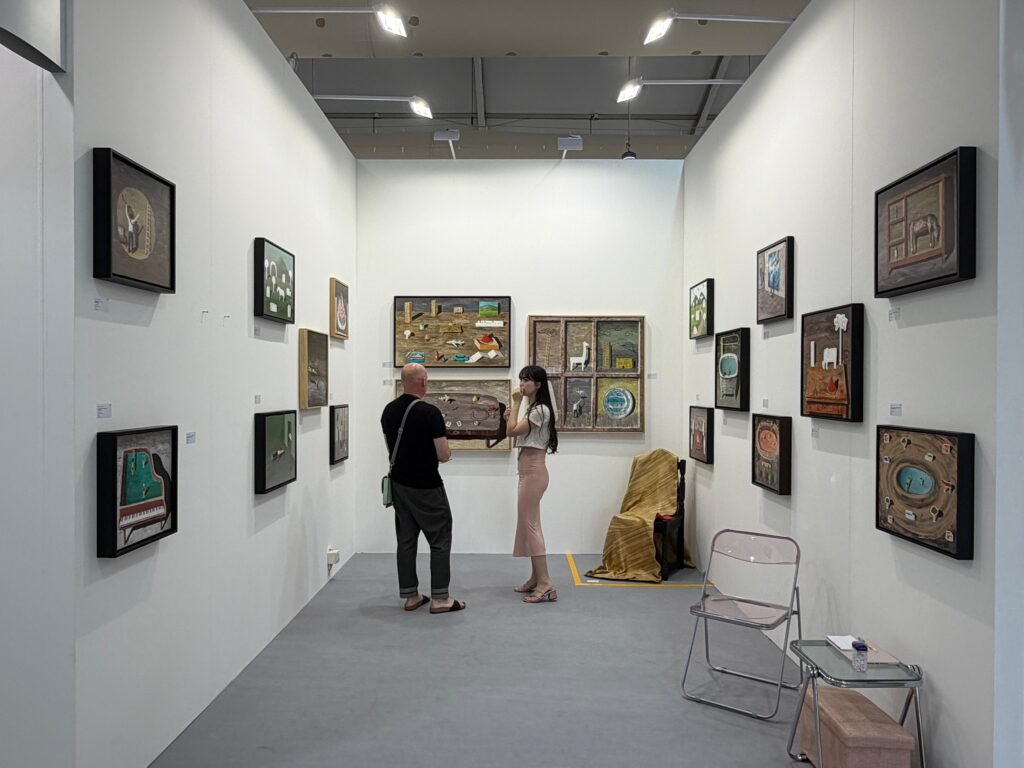
Vice & Virtue (V&V) reports the sale of a work by Joko Nastain for $3.000, reflecting a growing interest in the artist’s practice among international collectors.
Following its debut at Art Shanghai, V&V marks its second international fair participation at Art Central Hong Kong 2026, with works of Joko Nastain’s paintings use a critical and reflective visual language to address social, political, and everyday life dynamics. His works blend figurative imagery with strong narratives, opening a dialogue between personal and collective reality. Nastain’s sharp yet poetic approach invites audiences to interpret and question the meanings behind his visual representations.
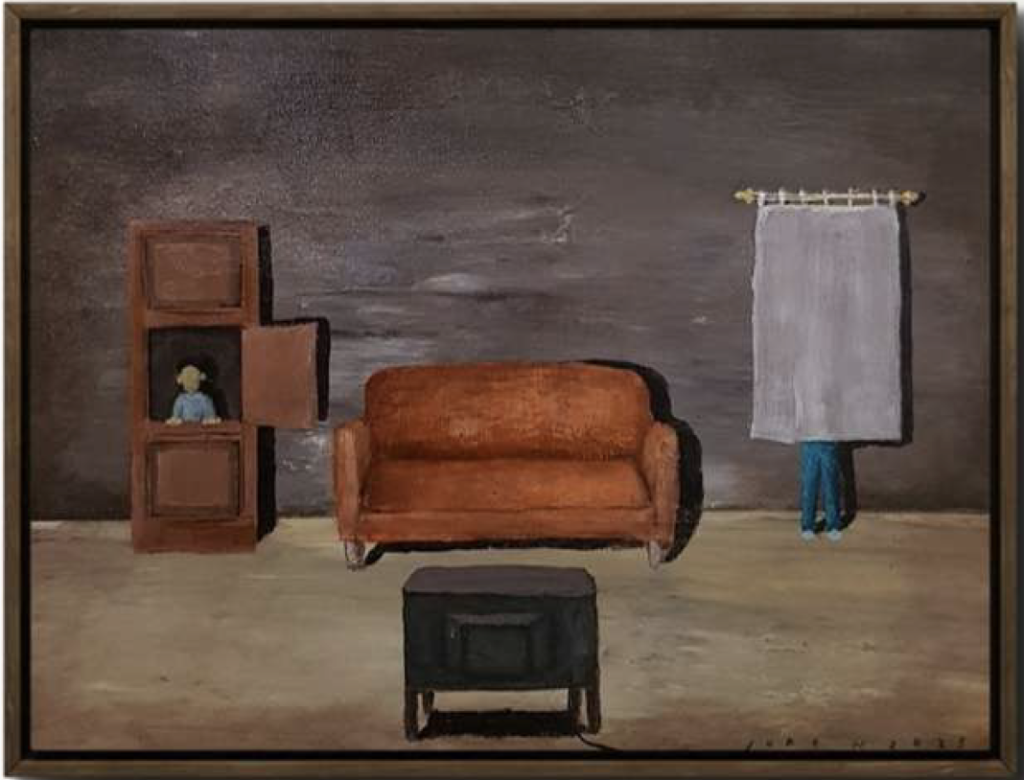
Joko Nastain
I’m scared but I want to see it, 2025
Acrylic on canvas
30 x 40 cm
Sold: $3.000
Puri Art
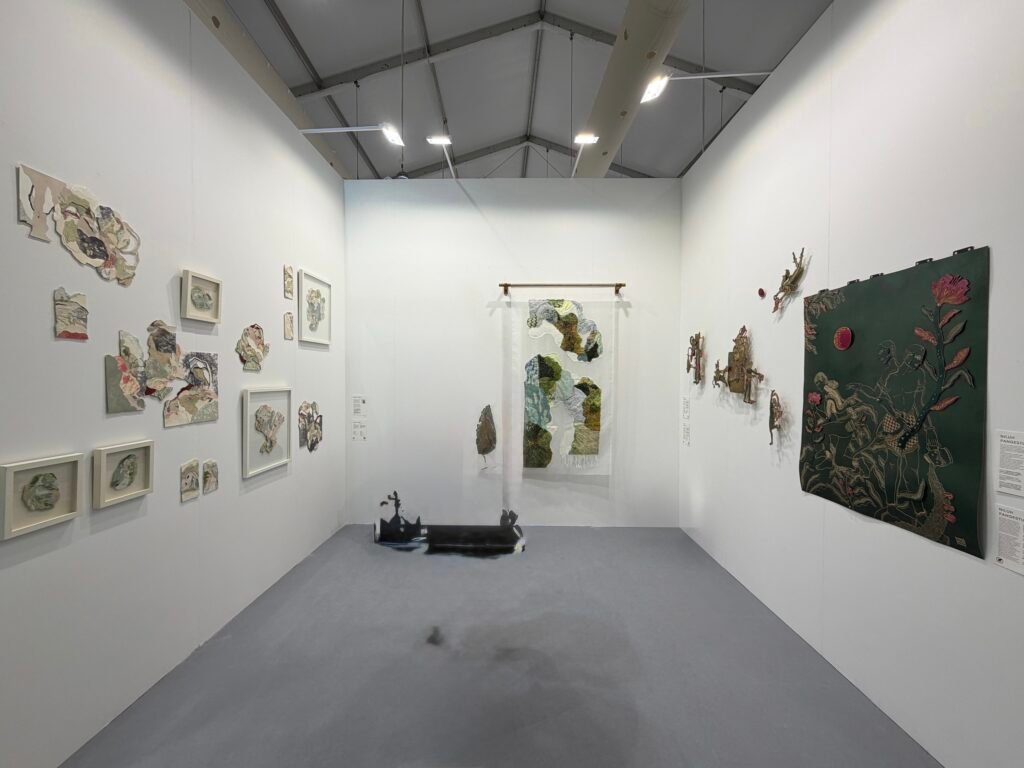
Puri Art Gallery presents a focused dialogue between two Balinese artists, Irene Febry and Ni Luh Pangestu, whose practices are deeply informed by the cultural systems shaping collective behavior. Invested in the specificities of local traditions, their works offer a nuanced perspective on how inherited structures continue to inform contemporary life. A notable highlight includes the sale of Ni Luh Pangestu’s artwork for $1.600, signaling a rising interest in the artist’s practice.
Ni Luh Pangestu reimagines the figures of Kamasan, traditional characters from shadow theater, using leather. She offers alternative perspectives on the sociocultural traditions of our time, with the aim of preserving, and at times challenging, the values and norms that define our societies.
Irene Febry by creating abstract forms from layers of traditional organic paper, Irene Febri develops a metaphor for nature that bridges the gap between the natural world and lived experience, inviting us to take a critical look at our relationship with our environment.
Rather than approaching these dynamics as abstract frameworks, both artists engage them as lived realities, inscribed in the body, embedded in materials, and negotiated through daily acts of making. Through this lens, their practices unfold as intimate yet critical reflections on identity, ritual, and the subtle mechanisms through which culture is continuously performed and transformed.
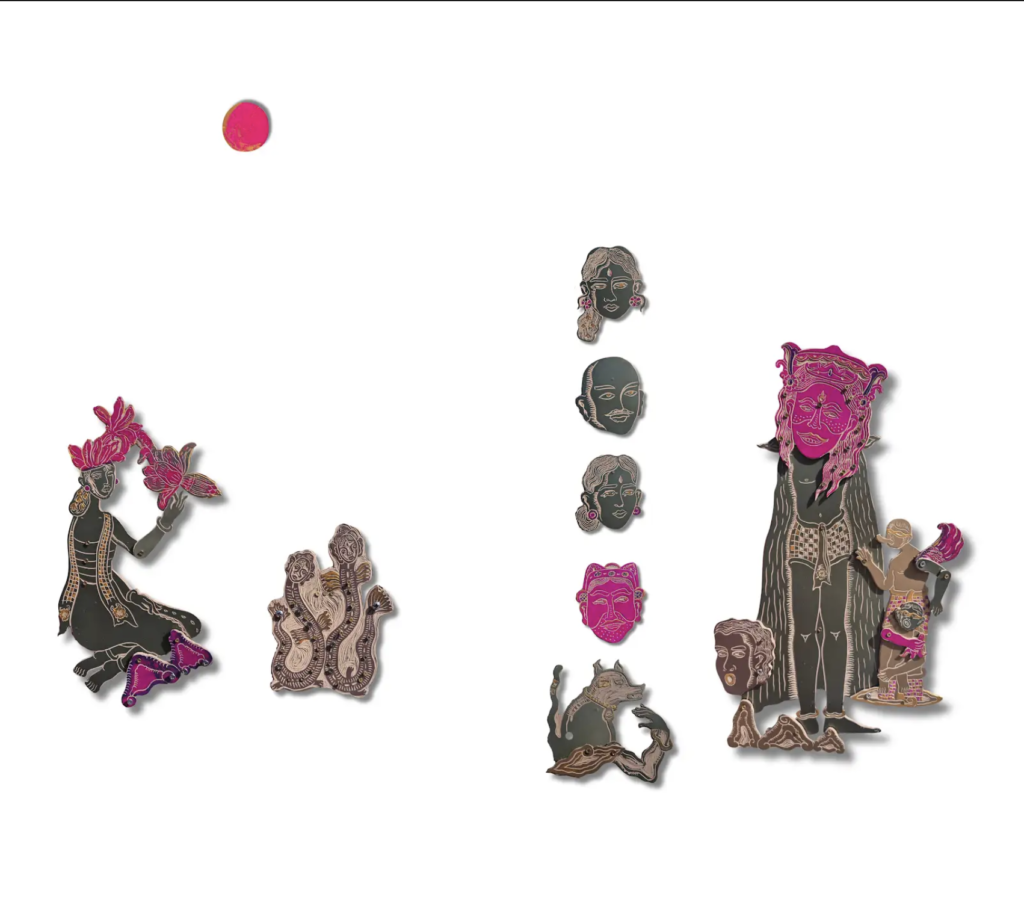
Niluh Pangestu
Draconian Laws, 2026
Variable Dimensions Offset Ink on Carved Linoleum Plate
Sold: $1.600
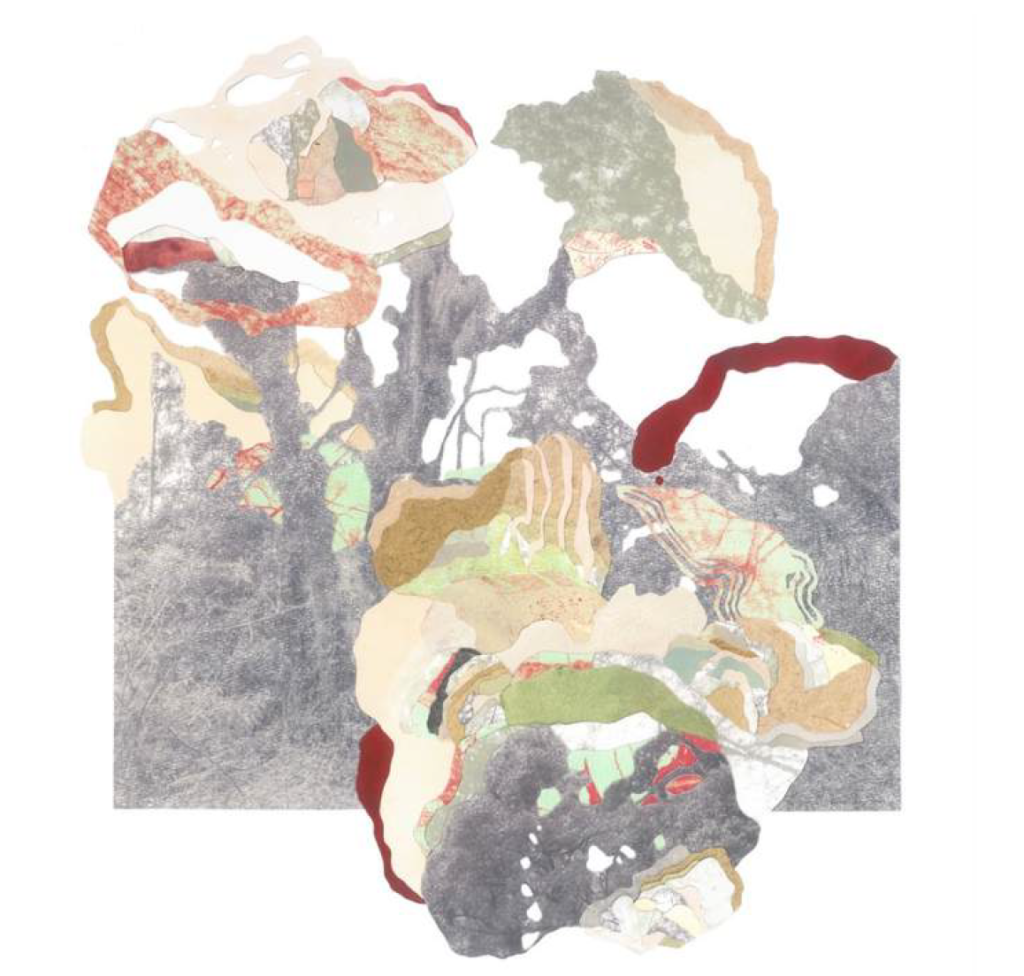
Irene Febry
Forest, 2026
Rice paddy paper, banana paper, washi paper, gouache paint, acrylic paint, screen-printing, graphite, photographs printed on acid free paper
44.2 x 39.1 cm
Isa Art
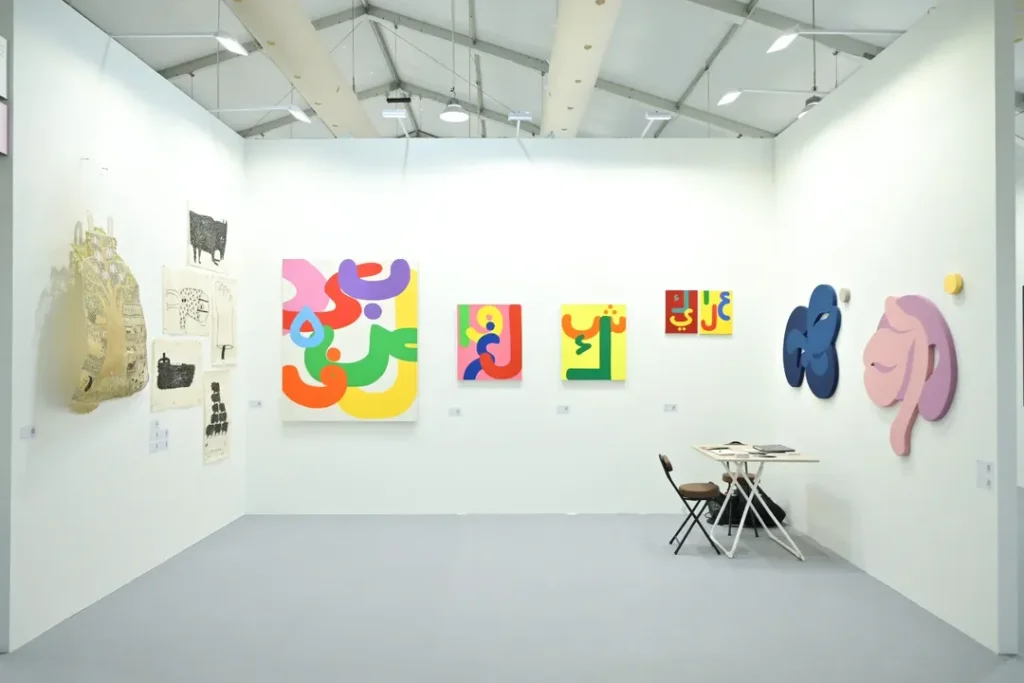
ISA Art Gallery unveils a conceptually driven booth exploring the role of the line as a carrier of movement, narrative, and perception, drawing from both modernist thought and Indonesian visual traditions. Within this presentation, the gallery brings together practices that engage with the line not simply as a formal element, but as a structuring force through which space, time, and meaning unfold. Notably, the booth also recorded early sales, including three works by Arahmaiani, two sold at $3.500 each and a third at $10.000, confirming strong institutional and collector interest.
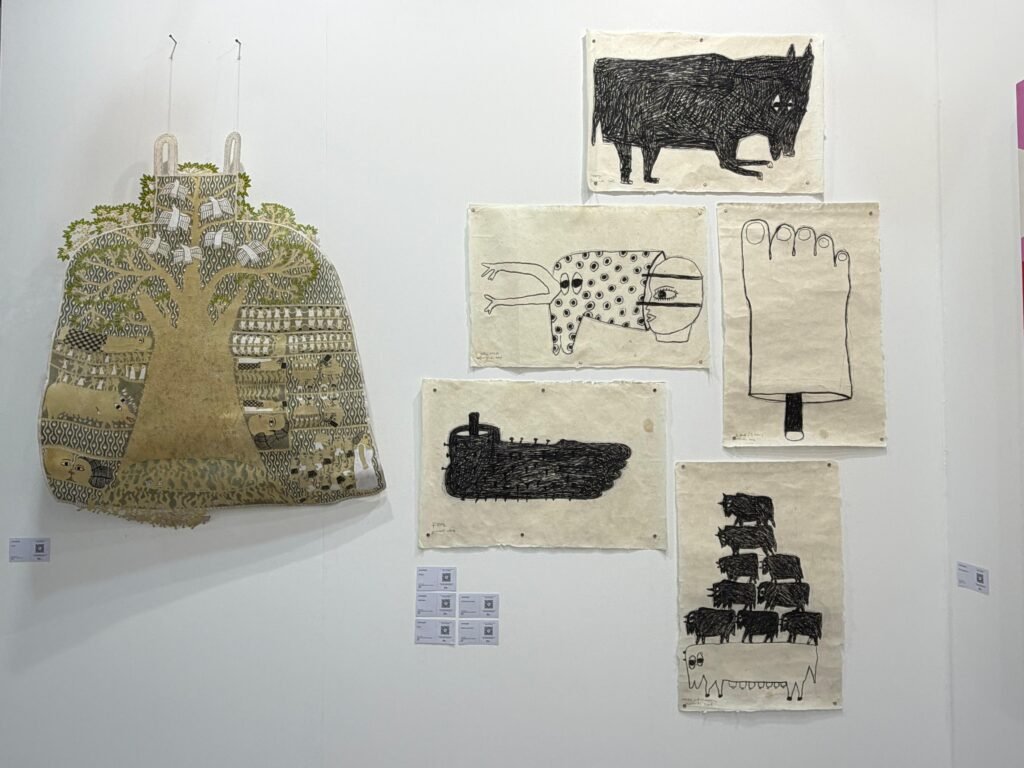
Among the artists presented, we particularly highlight Jumaadi, whose practice embodies this approach through a deeply narrative and introspective language. Based between Yogyakarta and Sydney, the artist constructs poetic visual worlds where love, whether romantic or familial, intertwines with mythological figures, spirits, and imagined creatures. His work unfolds as a form of storytelling rooted in personal memory and psyche, where fluid lines and delicate compositions trace emotional states and lived experience. Positioned at the intersection of intimacy and imagination, Jumaadi’s practice reflects a continuous negotiation between inner landscapes and cultural narratives.
This trajectory is further reinforced by his recent participation in institutional group exhibitions across Asia. At the Busan Museum of Contemporary Art, he is included in The Rhinoceros and the Unicorn, a project that reinterprets traditional folktales through largely wordless visual narratives, inviting viewers to construct meaning beyond fixed endings. In Shanghai, Jumaadi takes part in Down to Earth at TANK Shanghai, a curatorial initiative emerging from the TANK Curator Prize that reconsiders human relationships with land, ecology, and interspecies connection. In addition, the artist had the work Upside-Down Garden commissioned for Barangaroo in Australia.
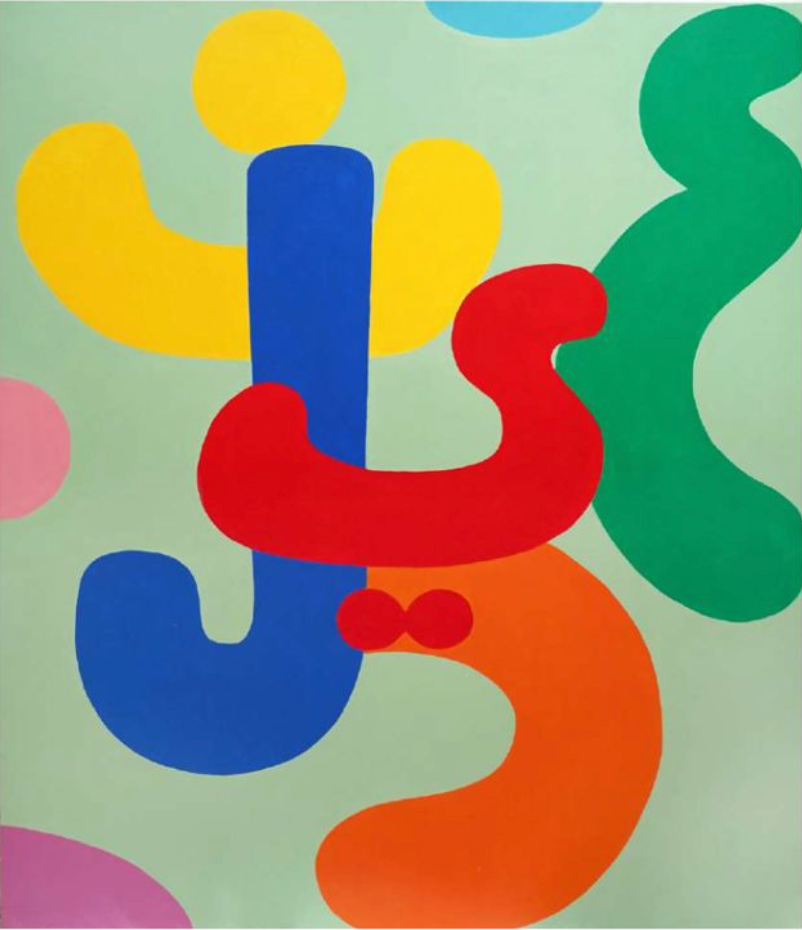
Arahmaiani
Pelangi I, 2019
Acrylic on canvas
118 x 99 cm
Sold: $ 10.000
EDSU House
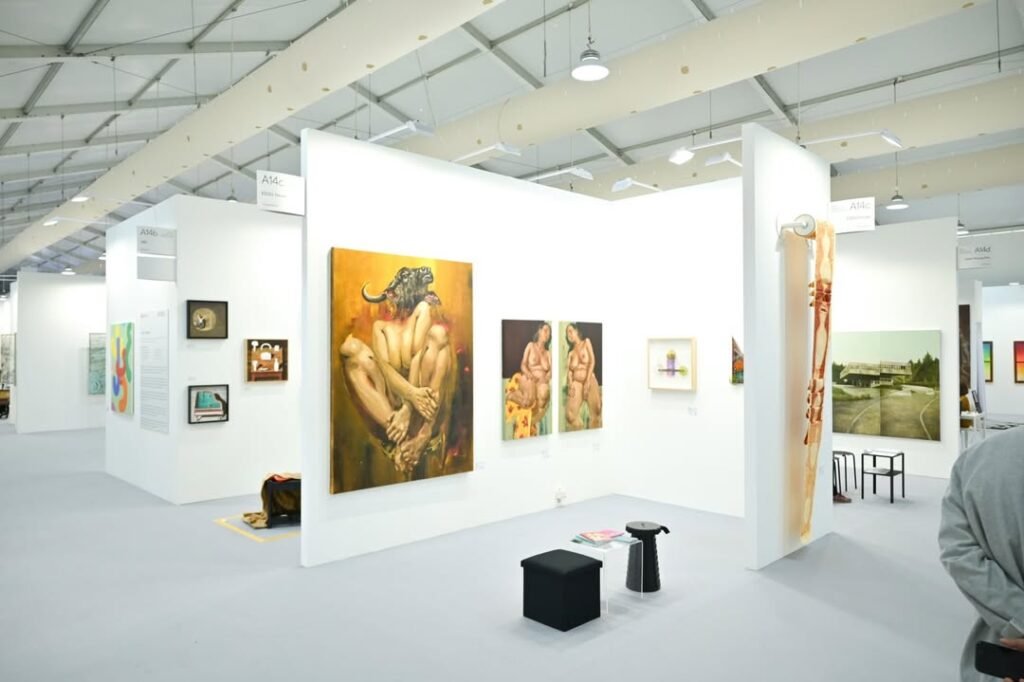
EDSU Gallery reports solid engagement at the fair, with multiple sales reinforcing interest in its program. Three works by Rizki Tilarso sold at $520 each, while a piece by Ayurika was acquired by a French collector for $2.500, reflecting a growing international attention toward emerging Indonesian practices.
Rizki Tilarso develops a practice rooted in drawing and mixed media, often characterized by intricate compositions and a strong graphic sensibility. His works explore layers of everyday life, memory, and imagination, combining detailed line work with experimental material approaches. Through this process, Tilarso constructs dense visual narratives that oscillate between figuration and abstraction, inviting the viewer into complex, almost immersive pictorial spaces.
In parallel, Ayurika’s work unfolds through a more symbolic and introspective language, often engaging with themes of identity, femininity, and emotional states. Her practice navigates between painting and illustrative forms, where delicate textures and refined compositions give shape to intimate narratives. Through subtle yet evocative imagery, Ayurika creates works that resonate on both personal and collective levels, positioning her practice within a broader reflection on contemporary subjectivities.
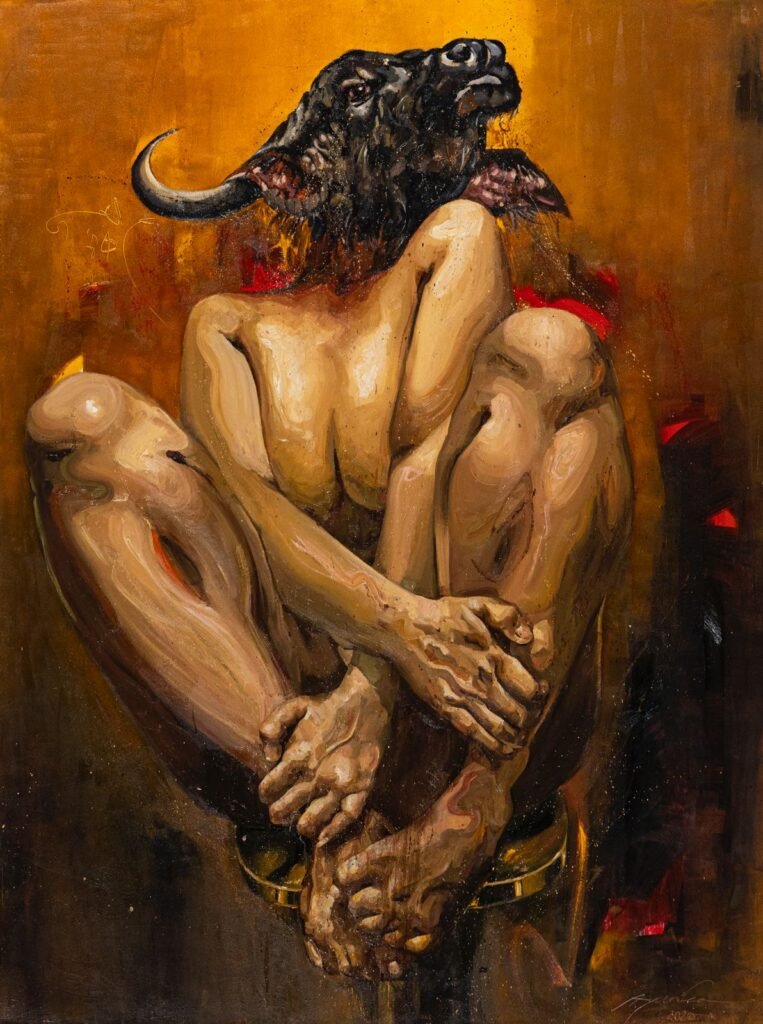
Ayurika
Dur, 2025
Oil on Canvas
200 x 150 cm
Sold: $2.500
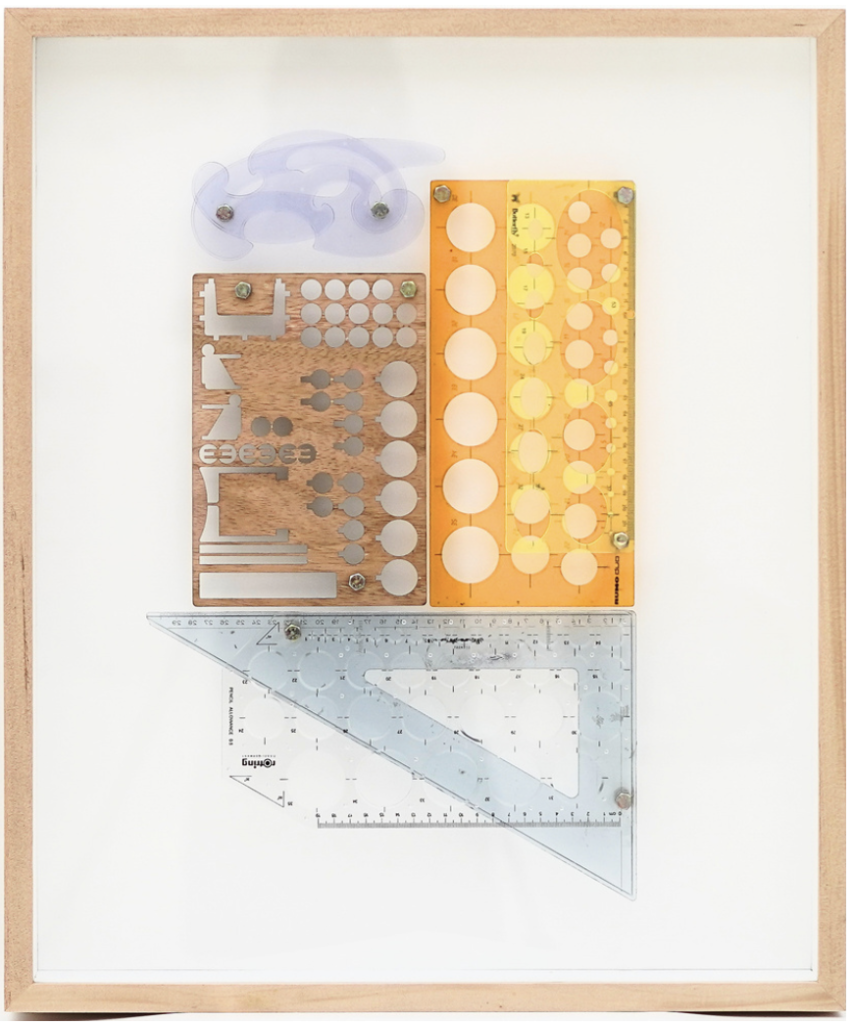
Rizki Tilarso
Bentuk Asimetris Antara Bidang & Geometri, 2025
Ruler, Plywood, & Bold
60 x 50 cm
Sold: $520
Art Basel Hong Kong 2026
The Art Basel HK 2026 fair features three major galleries supporting Indonesian artists:
Mizuma
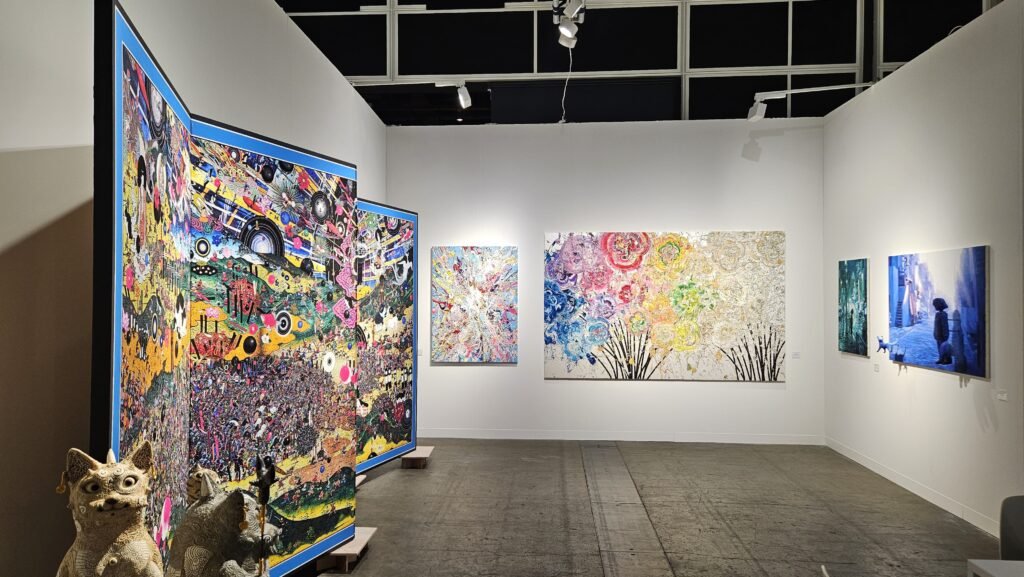
At its booth, Mizuma Art Gallery reports accessible price points for Asian collections, with works sold by Nyoman Arisana and Albert Yonathan Setyawan.
The Gallery has a longstanding relationship with Indonesian art, thanks to its founder, Mr. Mizuma Sueo, who completed a residency in Yogyakarta to foster lasting ties between Indonesia and Japan. Indonesian artists are featured at the booth: Albert Yonathan Setyawan, who created a terracotta relief, a painting from Kemal Ezedine, a Bali based painter and activist, and works from Indieguerillas and I Nyoman Arisana.
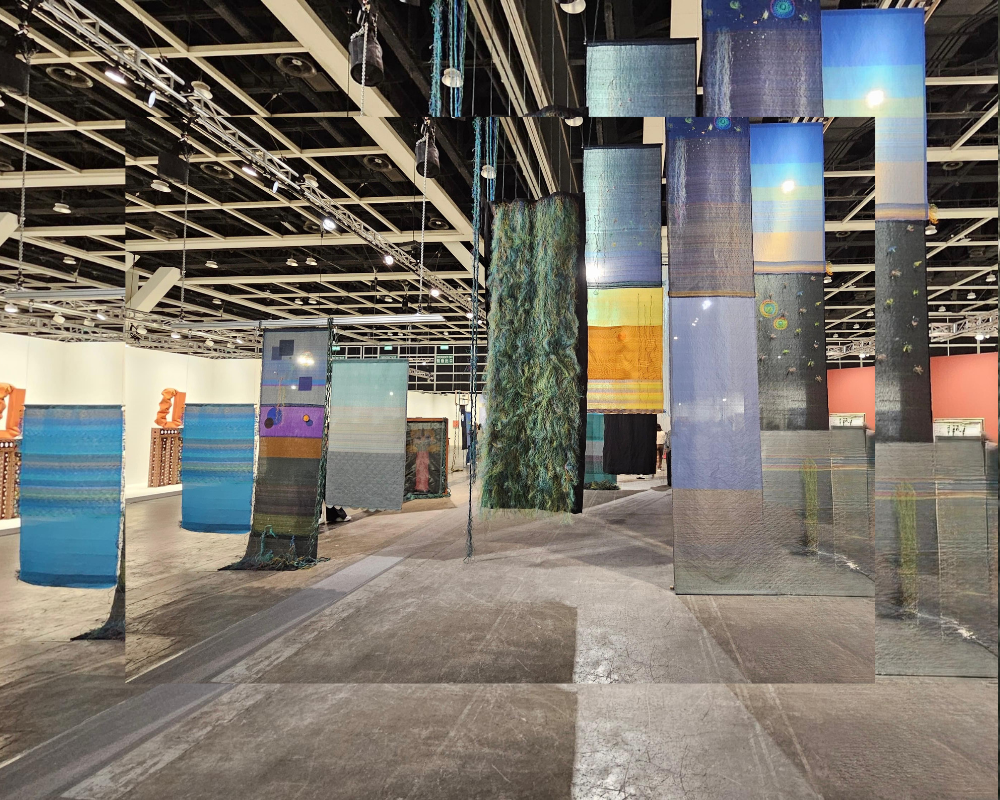
In the Encounter section, Ari Bayuajii, a Balinese artist who divides his time between Indonesia and Montreal, immerses us in the oceans with Weaving The Ocean, a monumental installation made of plastic recovered from the ocean and patiently woven by artisans and craftspeople from Sanur, Bali. Weaving the Ocean was first presented in Bangkok in 2022 and has continued to evolve and grow richer with the collaboration of the community of spinners and weavers. This piece is sure to be a landmark work, both for its artistic qualities and intricate details, as well as for its social impact and ecological message.
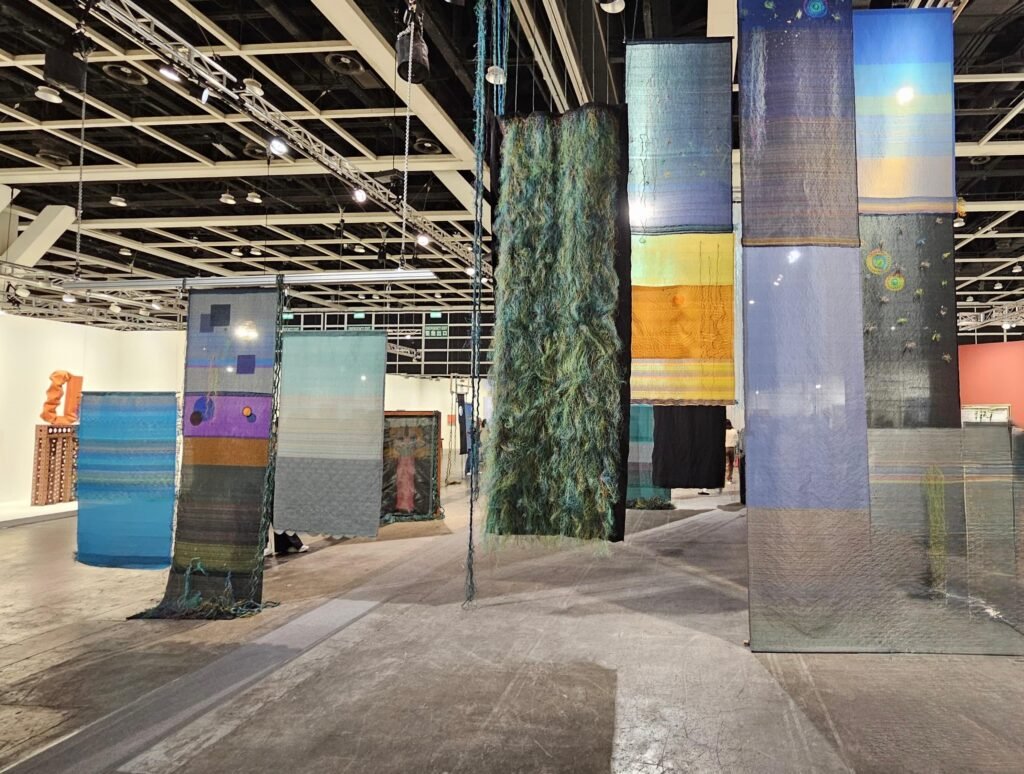
Ari Bayuaji has exhibited his work in numerous Asian museums as well as in Düsseldorf, Washington, D.C., and Toronto and participating from institutional collections in Canada, Japan, and Indonesia. The artist is actively preparing for his next solo exhibition, which will open on June 20, 2026, at the Museum of Contemporary Art in Baie-St-Paul, Quebec. He is also planning a group exhibition at the Montreal Museum of Fine Arts in May 2026.
Gajah
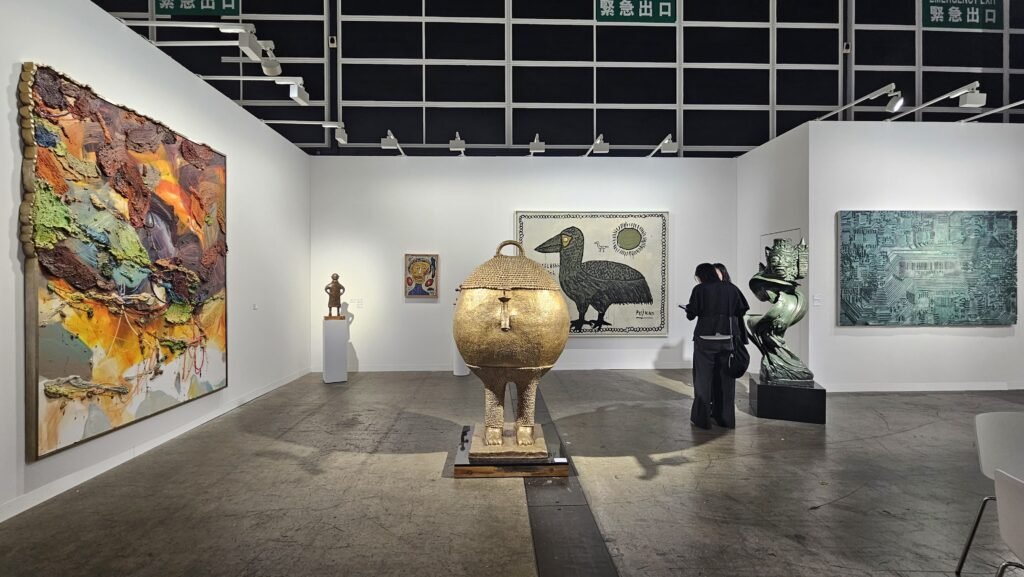
At its booth, Gajah Gallery reports strong sales, including a painting by I Gusti Ayu Kadek Murniasih (Murni) sold for $15.000, a sculpture by Jumana Murti placed at $35.000, and an oil on linen by Mangu Putra sold for $90.000.
Gajah Gallery, with locations in Jakarta, Singapore, Asia’s economic hub, and Manila, actively supports Indonesian art, notably through its current exhibition in Jakarta titled Critically Bali and its booth featuring no fewer than 10 Indonesian artists, including I Gusti Ayu Kadek Muriasih (Murni), who is exhibiting three paintings, and the youngest sculptor, Dzika Afifah. It is worth noting that the presence of Gadja Gallery in Singapore is no coincidence, given the significant number of its artists represented in the halls of the National Museum of Singapore.
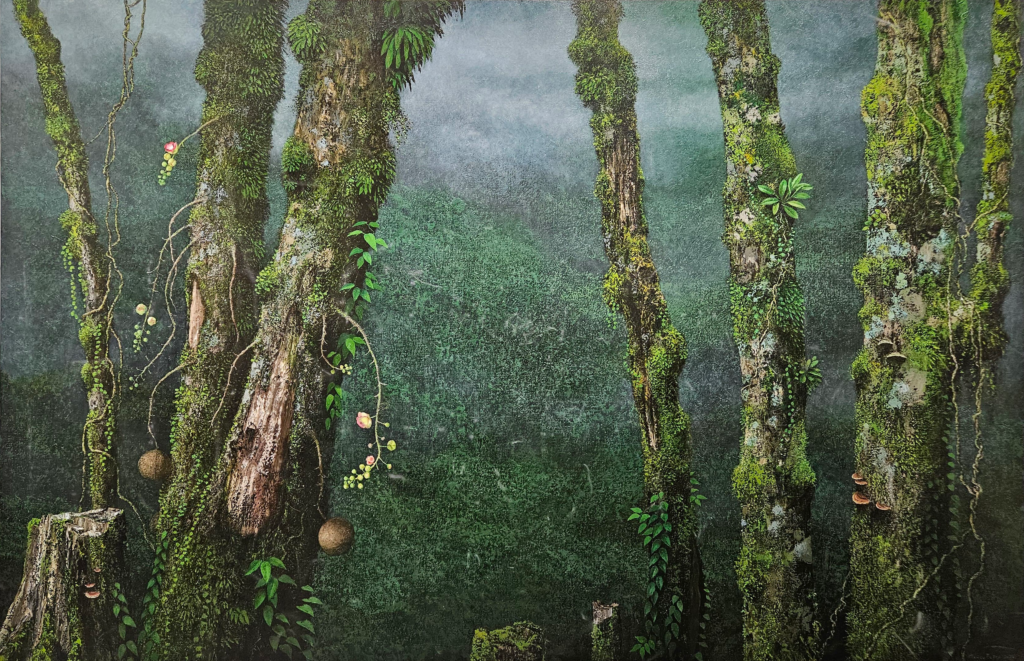
Mangu Putra
Bisikan Hutan (Whispering Woods), 2026
Oil on linen
195 × 300 cm
Sold: $90.000
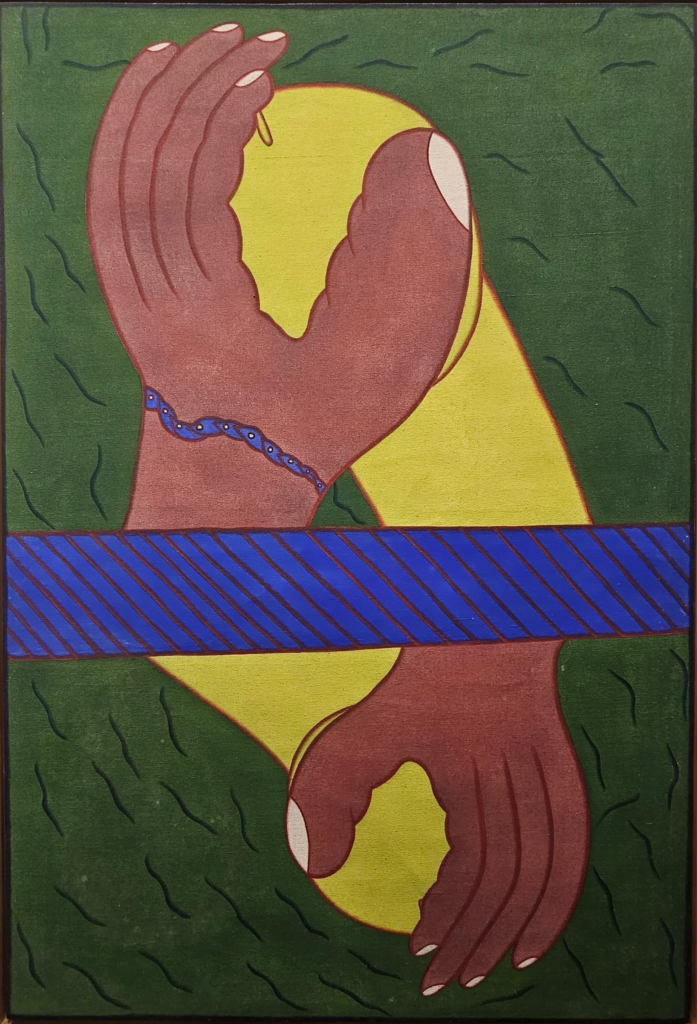
I Gusti Ayu Kadek Murniasih
Keduanya Make Me Gila
(Both of Them Make Me Crazy), 2003
Acrylic on canvas
149.5 × 100 cm
Asking Price: $120.000
ROH Projects
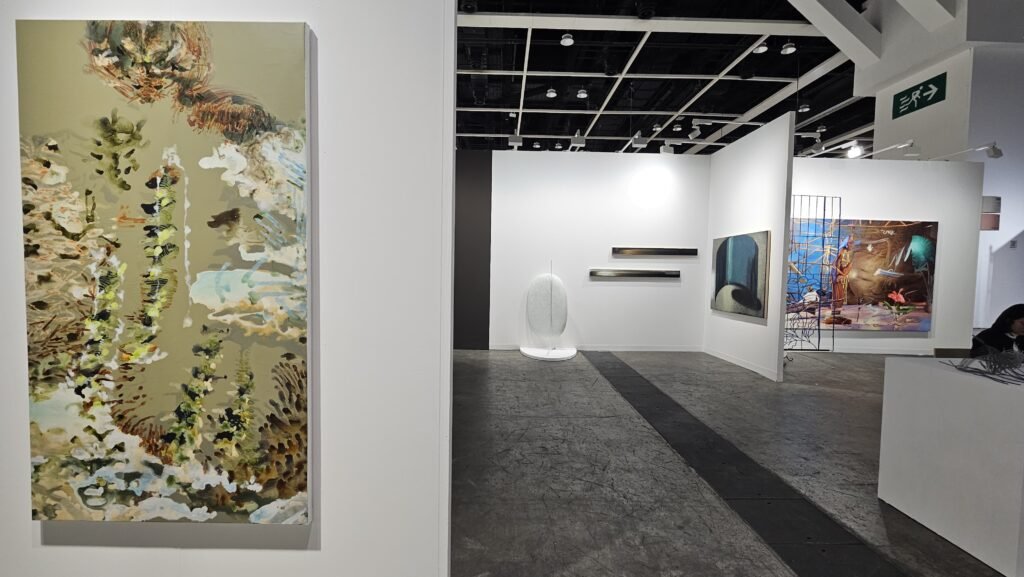
Roh Projects, based in Jakarta, has supported emerging Indonesian artists since its inception in 2014 and has decided this year to expand its program to Southeast Asia. However, two major artists are featured at the booth: Mella Jaarsma, with a 2005 sculpture titled Floating Image priced at $34.000, and an ink-on-canvas work by Oototol for $12.000.
Mella Jaarsma is an artist and activist known for her complex installations that explore cultural and racial diversity through clothing, the body, and food. She studied in the Netherlands and later in Indonesia in the 1980s, where she eventually settled and built her career.In 1988, she co-founded Cemeti Art House (now Cemeti Institute for Art & Society), an important platform for contemporary art in Indonesia. Her work has been widely exhibited both nationally and internationally, across major institutions in Asia, Europe, and Australia.Her artworks are also included in significant public collections, confirming her influential role in contemporary art, particularly in Southeast AsiaCurrently,
A retrospective of the Balinese artist Oototol is being presented simultaneously at the Roh Gallery and Komunitas Salihara. His works, painted in “grisaille” using the classical technique of wooden sticks and Indian ink, blend everyday life, the imagination, and social symbols.He often depicts figures in uniform (self-portraits) in various human and fantastical scenes.His world appears simple but reveals great symbolic and metaphorical complexity.His playful style explores the tension between the individual and society, as well as notions of power. His works remain rooted in Balinese cosmology, navigating the realms of life, death, and imagination.
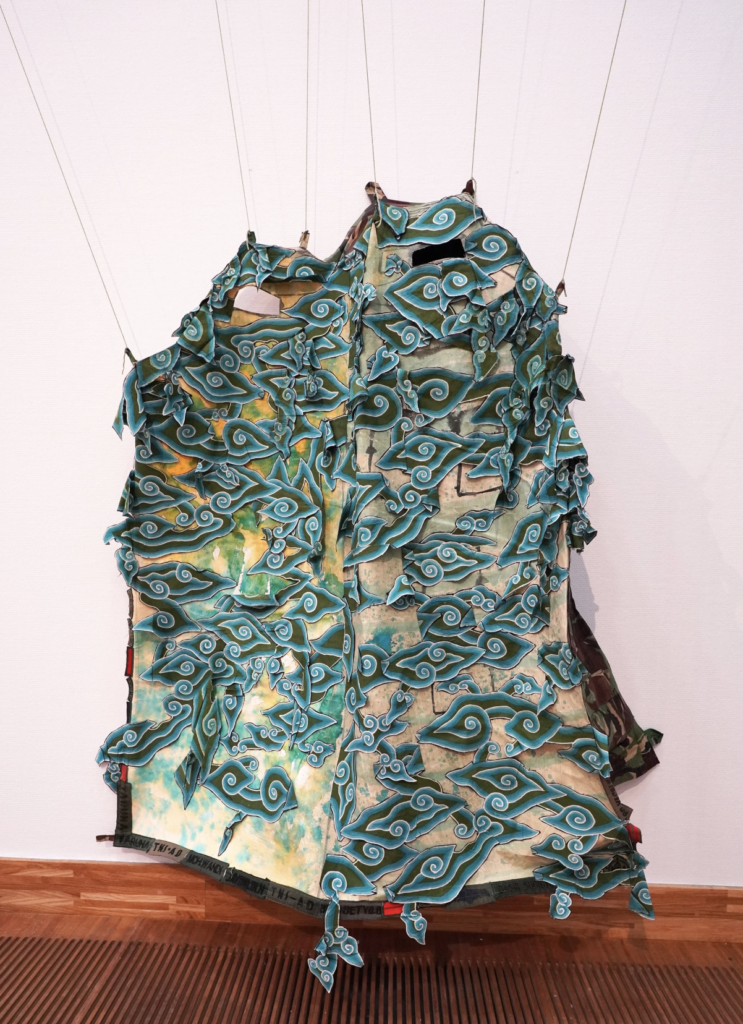
Mella Jaarsma
ASAL – Floating Images, 2005
Batik, military cloths, embroideries
Asking Price: $34.000
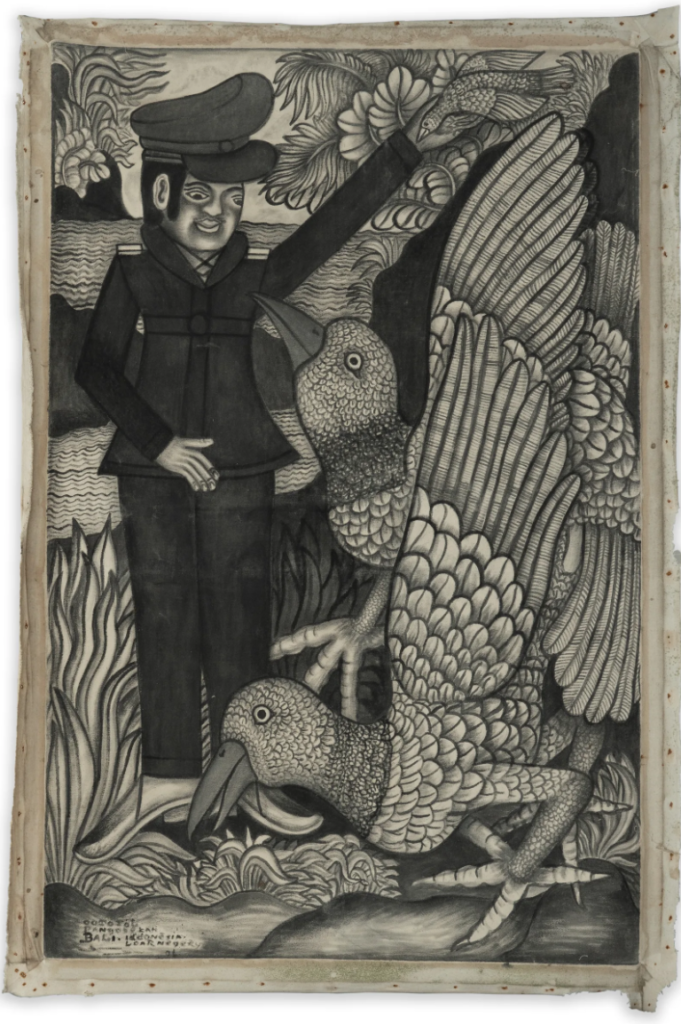
Oototol
Untitled, n.d
Chinese ink on canvas
170 x 110 cm
Asking Price: $12.000
The Indonesian art market experienced a major boom in the 2000s, driven by a generation of artists such as Heri Dono, Tromarama, Fx Arsano, and Entang Wiharso. These artists helped shape the transition from the post-Suharto era (1998) to an established democracy. Subsequently, the market matured, undergoing a period of contraction while paving the way for the emergence of a new generation, ready to make its mark on a constantly evolving international market.
Indonesia is increasingly establishing itself as a key economic and geopolitical partner on the global stage. However, it is the community and intergenerational values developed by Indonesian artists within their own artistic ecosystem that undoubtedly form the foundation for even more enduring success. These foundations should enable Indonesian art to achieve the place it deserves on the international stage.
UTOPIA Bali Art: Discovering Utopia Through Art and Ideas.
It was just a short step from Brazil to Bali, which I took over a year ago to develop UTOPIA Bali Art which is an innovative and inclusive platform with the ambitious mission of revitalizing the concept of utopia as a catalyst for critical reflection on the past, present, and future. By challenging established norms and the foundations of society, UTOPIA Bali Art seeks to inspire new perspectives and drive meaningful change.
At the heart of this vision lies the development of an art center on the island of Bali, in Ubud, a village renowned for its deep connection to the arts and spirituality. This strategic location serves as a dynamic link between modern and contemporary art and the humanities.
The art center, designed by DDAP Architect, is conceived as a space that fosters the convergence of ideas and supports a wide range of artistic practices. Contemporary art interacts, among other fields, with architecture, film, music, and the graphic arts. The programming features a diverse group of international artists engaging in dialogue with their Indonesian and Asian peers. Through these choices, UTOPIA Bali Art aims to cultivate an environment rich in exploration, exchange, and creativity.

Franck James Marlot
Curator, Founder of Utopia Bali Art Project.