
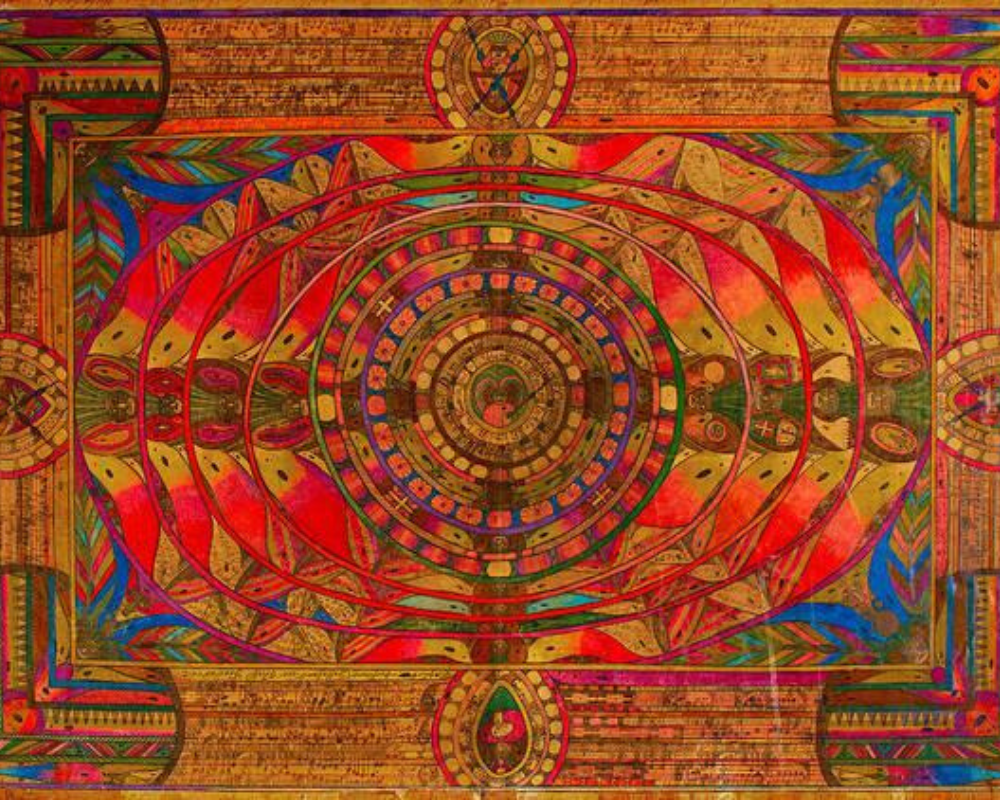
Throughout Antiquity, the Middle Ages, and the Renaissance, images educated those who could not read, rituals unfolded through sculpture, and collective memory was etched into walls, altarpieces, and frescoes. In churches and palaces, art guided emotions as much as beliefs. Even when serving religious or political power, it remained a compass, helping humans navigate time, devotion, fear, and the unknown.
By the early twentieth century, something cracked open. With the rise of the historical avant-gardes, Cubism, Futurism, Expressionism, Dadaism, and later Surrealism, art stopped pretending to mirror the world. Instead, it began to shake it. Perspective collapsed, bodies fragmented, logic dissolved.
After the war, this shift intensified. Through Abstraction meaning was no longer fixed on the surface of the work. It unfolded in space, in movement, in proximity. Art became something you encountered with your body not just your eyes. Sense replaced explanation. Experience replaced narrative. The artwork was no longer complete without the viewer’s presence, perception, and time.
In parallel, movements such as Art Brut, outsider art, and early therapeutic-oriented practices renewed attention to art as a means of psychic expression, inner necessity, and emotional processing. In Brazil, pioneering figures such as Nise da Silveira revealed the symbolic and therapeutic power of artistic creation within psychiatric contexts, while artists like Lygia Clark radically expanded the role of art moving from the object to lived, sensory experience, directly engaging the body, perception, and processes of psychic integration.
At the same time, the formalization of art therapy in Europe and the United States notably through figures such as Adrian Hill and Margaret Naumburg, a founder of modern art therapy further reinforced the understanding of artistic practice as a space for emotional expression, symbolic elaboration, and psychological integration.
These findings resonate with a broader body of research compiled by the World Health Organization, which recognizes the role of the arts in promoting well-being, preventing mental health disorders, and strengthening social bonds. Art thus comes to be reconsidered not merely as cultural production or symbolic asset, but as a regulating environment of human experience.
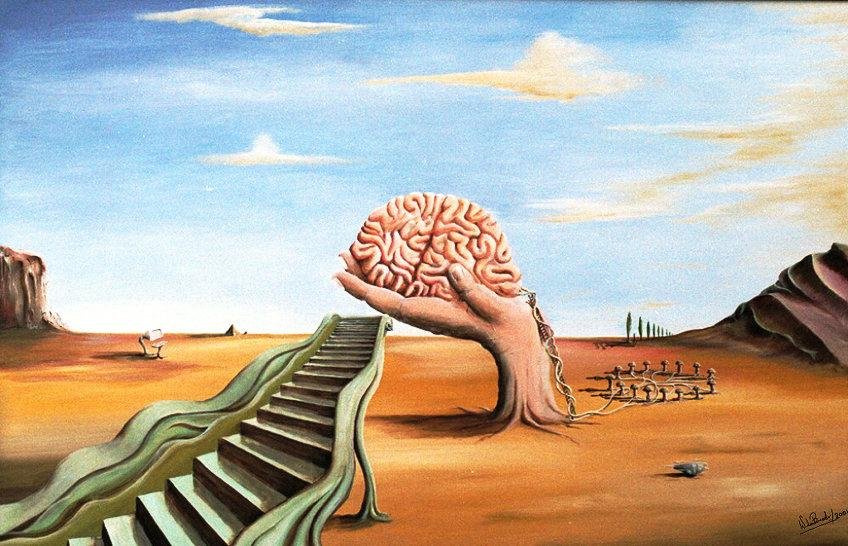
Art as a Regulating Environment for Human Experience
It is precisely at this point that contemporary debate reconnects, on new foundations, with an ancient intuition: art is not neutral for those who experience it. Recent studies demonstrate that aesthetic experience can produce measurable effects in the body, influence emotional states, and impact mental health.
Recent studies highlighted by the UK’s Mental Health Foundation emphasize the role of museums and galleries that encourage focused observation, slowing down, and emotional presence. These curated environments foster conditions that help individuals momentarily disconnect from everyday stressors, while stimulating a deeper connection with their own emotional states supporting processes of emotional regulation, introspection, and psychological restoration.
Research conducted by King’s College London, in partnership with Art Fund, has shown that viewing original artworks in museum contexts generates physiological responses distinct from those observed when viewing reproductions. Monitoring of heart activity, skin temperature, and hormonal markers indicates reduced stress and increased emotional engagement when contact with the artwork occurs in a direct and contextualized manner.
From a psychological perspective, art functions as a mechanism of emotional regulation. Aesthetic contemplation can interrupt cycles of rumination, foster states of mindful attention, and enable the symbolic reconfiguration of inner experiences. On a physiological level, these processes are reflected in the modulation of the nervous system, associated with feelings of calm and balance.
On a neurophysiological level, some studies suggest that immersive aesthetic experiences may be associated with increased alpha brainwave activity, a rhythm typically observed in states of relaxed wakefulness, light meditation, and the transition between wakefulness and sleep. These alpha states are linked to reduced cognitive hyperarousal, more diffuse attention, and greater emotional and symbolic receptivity. In this context, the encounter with an artwork may foster a state of presence comparable to that sought in certain meditative practices: a mental space conducive to integration, creativity, and emotional regulation.
Theories such as broaden-and-build and the concept of flow help explain how art can expand individuals’ cognitive and emotional repertoires. A deep encounter with an artwork, whether through creation or observation, can induce states of presence, focus, and perceptual expansion, associated with greater psychological resilience and subjective well-being. Research in neuroaesthetics further indicates that meaningful artistic experiences activate brain networks linked to autobiographical memory, meaning-making, and the narrative of the self. In this sense, art functions as a privileged space for the symbolic elaboration of human experience, integrating emotion, memory, and identity.
Beyond the individual, art also operates on a collective level. Museums, concerts, exhibitions, and artistic practices create spaces of encounter and belonging, fundamental elements for mental health. Contemporary social prescribing programs already incorporate the arts as tools of expanded care, particularly in addressing social isolation.
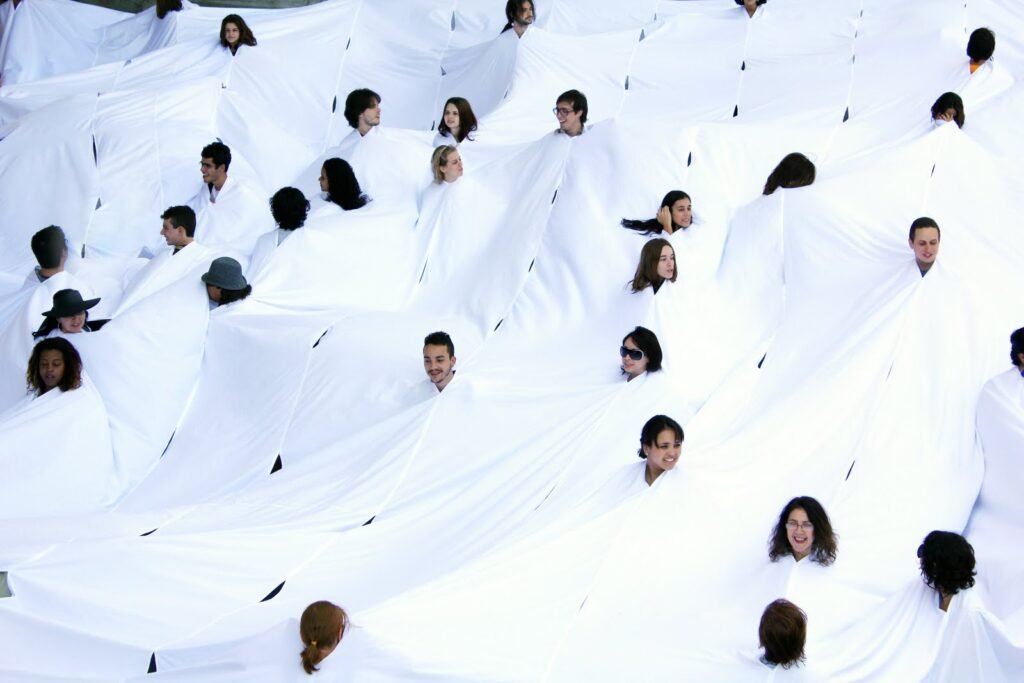
Living and navigating the art market is a daily challenge, yet also a privilege. We work with a medium that inherently calls for contemplation, attention, and questioning. Daily contact with a work of art can influence how we inhabit time, space, and ourselves, making aesthetic experience an active component of quality of life. In an era defined by hyperactivity, constant stimulation, and the glorification of permanent busyness as a sign of success, we have largely forgotten that nothing is more fertile than a quiet and settled mind.
In a civilization that has elevated agitation to a virtue and constant occupation to a measure of achievement, we risk losing contact with a more subtle source: the regenerative power of contemplation. This quiet, often overlooked activity restores our deepest energies and opens consciousness to dimensions that remain inaccessible in states of perpetual urgency. In this sense, art, and the time we grant ourselves to truly encounter it, becomes not only a cultural or economic practice, but a way of reestablishing a deeper relationship with time, attention, and inner balance.
In this context, acquiring a work of art goes beyond the logic of traditional financial investment. It also represents a personal investment, one that reflects identity, values, and sensibility, while building a coherent cultural legacy. When chosen with discernment, awareness, and alignment, an artwork ceases to be merely an asset and begins to generate emotional, intellectual, and symbolic returns over time
It is precisely at this point of convergence, between market, experience, and meaning, that Sophie Su Art Advisory operates. Through strategic curation and personalized guidance, we support collectors and institutions in building long-term relationships with art. Investing in art, when guided by specialized expertise, is also an investment in depth, well-being, and legacy.
To continue this dialogue, we invite you to get in touch with us (through the whatsaap buton on the right corner) for a complimentary valuation of your artworks or to receive personalized guidance in finding a piece that truly resonates with your sensibility and long-term vision.